Biology Driven Physics the History
From Engineered mixing to free superior Natural Mixing 1979-1999
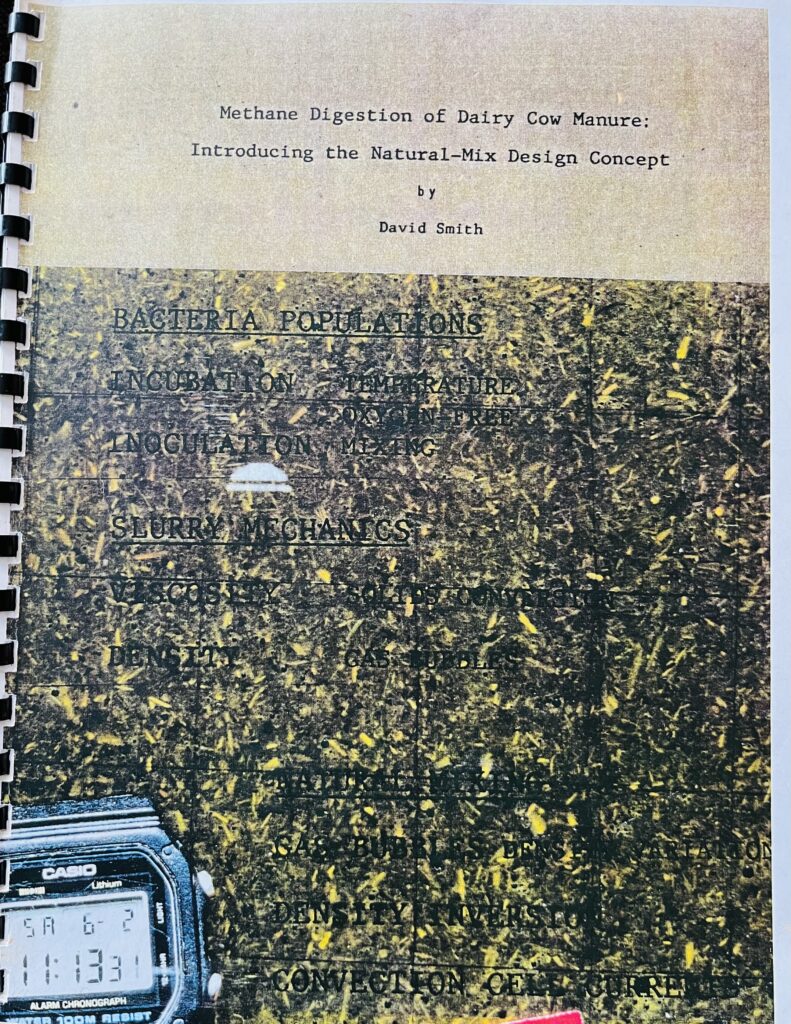
Methane Digestion of Dairy Cow Manure:
Introducing the Natural-Mix Design Concept
by
David Smith
1. Introduction
The benefits that methane digestion technology provide are as relevant today as ever. The energy crisis of the 70’s inspired the expenditure of great resources, by today’s standards, to develop and demonstrate nethane digestion technology for farm animal operations. The sewage treatment model (complete-mix) was adapted, and a new design (plug-flow) was developed for farm animal operations. Today, new projects are limited to grants or special interests while the majority of the digesters that have been built are now abandoned. The need for more practical technologies to provide the benefits of pollution control, renewable energy, and recycling of waste streams through methane digestion is clearly evident.
The author was introduced to methane digestion with the full scale dairy manure digester at Monroe, Washington (1977-1979). The Monroe digester was an example of the adaptation of sewage treatment technology utilizing continuous mixing to improve digestion efficiency. However, the tank proved to mix itself while the tank’s mixer decreased digestion efficiency. This was discovered after intermittent mixer operation was investigated to reduce electricity consumption and equipment wear. With the surprising performance of the Monroe digester and the opposite mixing strategies proposed by the two popular designs, the author began an independent investigation of digestion fundamentals to clarify these contradictions.
The discoveries made in the independent investigation provide a new and much more complex analysis of the most basic digestion fundamentals. Important discoveries were made with a more thorough analysis of slurry behavior and digestion efficiency in the full scale Monroe digester, and a more perceptive inquiry into bacterial growth and propagation supported by more versatile laboratory test digesters and procedures. This research shows that a very simple digester design, with proper operation, can facilitate naturally occurring digestion dynamics that provide more efficient digestion with less maintenance and lower cost when compared to either of the popular designs.
2. The Necessity of Mixing in Methane Digesters
The author shows that mixing, whether mechanical or natural, serves two essential functions in the high-rate continuous digestion process: inoculating fresh manure and maintaining slurry homogeneity. A complete analysis of mixing reveals that it also has a harmful effect on bacteria in inoculated and actively digesting slurry, as will be shown later.
Mixing must be provided to distribute fresh manure into bacteria-rich digesting manure, thereby limiting the distance bacteria must travel (and, by extension, the time necessary for fresh manure to become fully involved in the digestion process). This inoculation requires very thorough mixing;
otherwise, bacterial transit and acclimation time lowers the digestion rate.
Page 1
Mixing is necessary to maintain the slurry conditions for continuous digestion. The digestion process is continually modifying the viscosity and density of the digesting slurry so that gravity and displacement forces will then cause separation, both temporary and permanent, in the absence of aixing. This report shows that if a continuous digester’s high-solids slurry is homogenous and is not mixed mechanically, then it must be mixing naturally.
Historically, methane digester research and designs presuppose that:
1) thorough mixing can take place only with a mechanical mixer, 2) that mixing has either a beneficial or harmful effect on digestion, but not both and, 3) that fresh manure added to a digester would not (for a significant period of time form a separate biological and mechanical region of the digester distinct from the actively digesting region. Other studies of digester mixing have been found but none that discriminate between the beneficial and the harmful effects of mixing that are isolated and studied separately in this research paper. The most common digester design (the complete-mix digester) employs a circular tank with a mixer or impeller at the center of the tank to thoroughly mix the tank’s contents. The most common digester for use with farm animal manures, the plug-flow digester, has no mixer. The plug-flow design’s underlying concept is that digesting manures will be continually displaced along the length of the tank with little intermixing. However, the complex, conflicting and mutually interdependent characteristics of bacterial digestion and natural slurry mixing preclude such a simple analysis of the anaerobic digestion of animal manures. This research paper will demonstrate that thorough mixing in digesters can occur without a mechanical mixer, that mixing itself has more than one effect on the methane digestion process, and that fresh manure added to a digester can form a distinct and separate biological and mechanical region within the digester and significantly reduce digestion efficiency.
Although thermal convection currents are well known, this report will demonstrate natural mixing currents that can be much more significant than thermal currents.
2.1 Mixing and Optimal Methane Digestion
To fully understand how methane digesters function, it is essential to understand the fundamentals of bacterial growth and propagation – incubation and inoculation. Fresh manure does not contain bacterial populations high enough to produce the most efticient digestion. Since high bacterial populations are necessary for optimum methane production, a well-designed digester will facilitate the bacterial populations necessary through inoculation (the transport of efficient bacterial populations into fresh manure) and incubation (the growth of bacteria).
Optimal methane digestion consists of five components:
1. The presence of methane-digesting bacteria in manure. Fresh dairy and other manures naturally contain the bacteria necessary for anaerobic methane digestion. In an oxygen-free environment, the bacteria break manure down into methane and carbon dioxide gases. This bacterial process 1s used in the primary treatment of municipal sewage. High-solids dairy cow manure contains
Page 2
more nutrients per volume of digester than does municipal sewage, and so its digestion efficiency is far superior. This allows the digestion of dairy cow manure to produce a surplus of methane gas that can provide energy for heating and / or the generation of electricity. In order to provide efficient digestion rates, bacterial populations in fresh manure must be maximized through optimizing inoculation as outlined in components 2 through 5.
2. Bacterial incubation. Bacterial populations in manure can be increased through an incubation process. The environmental conditions necessary for the incubation of mesophilic bacteria are a warm (95 degree F), and an oxygen-free environment. A much more rapid digestion of dairy manure usually
begins about 15 days after the manure’s introduction into the digester, and will continue for about a month. The digester manure can then be discharged from the digester tank and replaced with fresh manure, repeating the incubation cycle. This process is called batch digestion. The methane forming bacteria incubate much more slowly than the acid forming bacteria and the effects of the imbalance can cause a further delay or even failure of the methane bacteria.
3. Bacterial inoculation. Introducing fresh manure into bacteria-rich digesting manure increases bacterial populations in the fresh manure and digester more quickly, and to higher populations, than incubation. Ideally, fresh manure should be mixed into the digesting manure as it is added to the
digester tank. This quickly transports the high bacterial populations already present in the digester into the fresh manure. Now, the incubating bacteria have fresh nutrients and the fresh manure has a high bacterial population. Given the geometric progression of bacterial growth, it will now take much less time to incubate bacteria to replace those lost with the discharged slurry. Digester efficiency results from this inoculation process, since longer periods of incubation, and possibly population imbalance, are bypassed. The digestion efficiency provided with good inoculation allows comparatively smaller digester tanks. When fresh manure is continually added, inoculated, and new bacteria incubated to restore the previous populations while an equal volume of digesting manure is allowed to overflow,
continuous digestion results. Note that it is necessary to
incubate the low bacteria populations in fresh manure only to start a digester.
4. Optimized mixing. Mixing, whether mechanical or natural, is necessary for inoculation, since it is not possible to separate bacteria from, or move bacteria through, high solids manures. Mixing digesting manure into fresh manure is the only way to provide inoculation. Optimal mixing can be achieved by doing the following:
- Thoroughly distribute the fresh manure throughout the digester. Thorough mixing is necessary because bacterial propagation in manure is quite slow. It takes much longer for bacterial propagation alone to involve fresh manure in the digestion process than incubation does and both are much slower than inoculation. This is true in all but the smallest laboratory digesters without the aid of mixing.
- Minimize mixing of the inoculated and digesting manure, as this is harmful to the incubation process of the bacteria. Digesting bacteria need the maximum mixing effect for their transport into fresh manure page 3
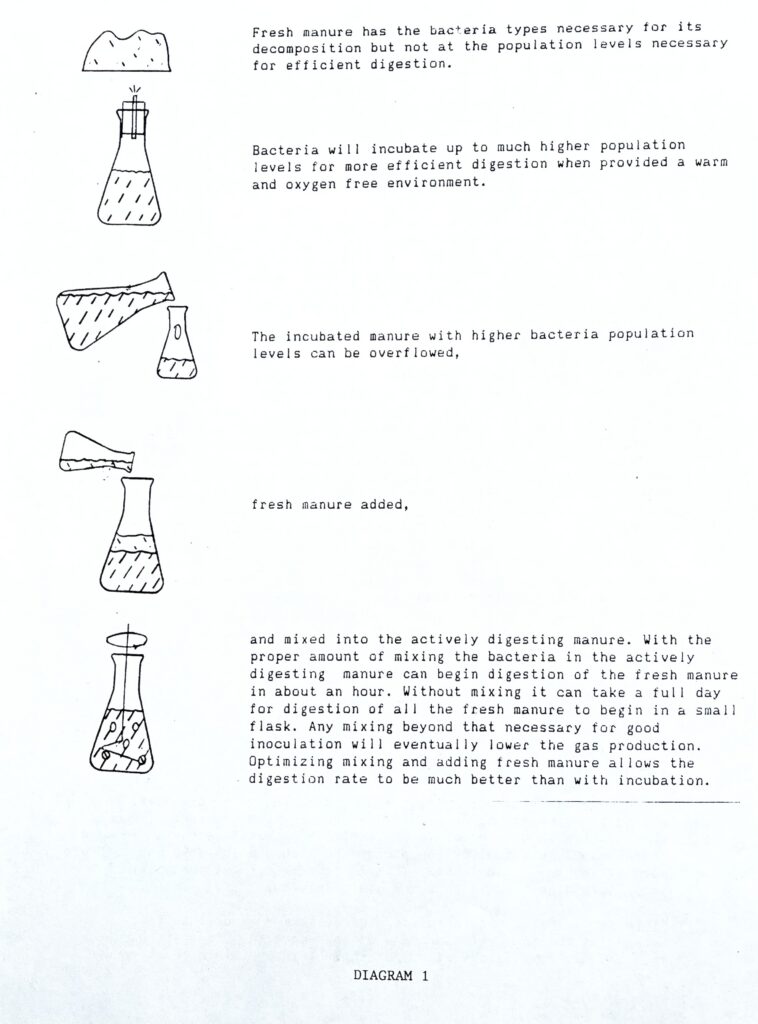
(inoculation), but the minimum mixing motion from the slurry, which is harmful to their growth (incubation). Laboratory tests for analyzing the conflicting aspects of mixing will be presented in Section 3 of this it should be noted that mechanical mixing may be occasionally
necessary, but only when slurry conditions do not provide sufficient mixing naturally.
Figure 2.1 Theoretical effects of Mixing on Gas Production
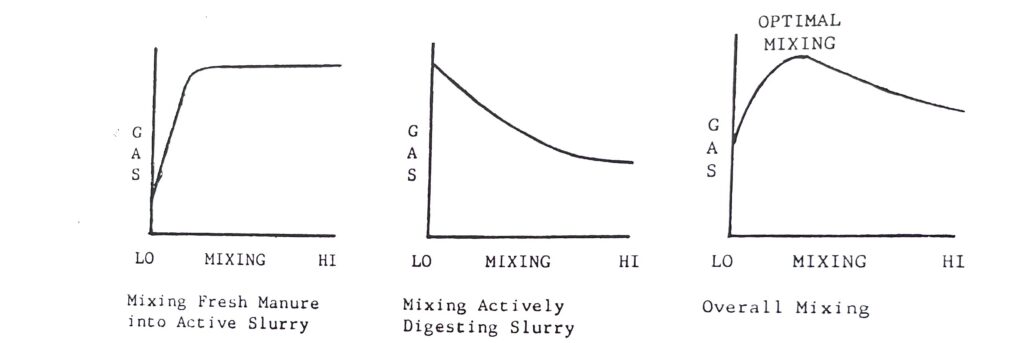
5. Natural mixing. Proper methane digester design and operation allows the natural methane decomposition process itself to provide optimal mixing, and many manures will provide the digestion dynamics for natural mixing. Optimal placement of the digester’s heater and inflow and outflow ports, combined with correct operation, optimizes the benefits of natural mixing.
From the discussion, three laws can be seen to define the parameters of methane digestion. The first is stated here and the others after further discussion.
The First Law of Methane Digestion of Animal Manure in a Simple Tank
Bacterial population levels in manure added to a digestion tank determine its rate of digestion and the growth and propagation of the bacteria necessary for high rate digestion is determined by incubation and inoculation. The environmental conditions that support the incubation and inoculation processes in the tank are listed below:
Incubation
- Proper temperature (95°F for mesophilic bacteria)
- Oxygen-free environment
- Unmixed environment
Inoculation
* Mixing (Mixing is the only simple method of transporting the high bacterial populations necessary for high rate digestion into the fresh manure and this process is much more
page 4
efficient than incubation from the low population levels in fresh manure. Also, mixing is . complex and conflicts with the conditions for incubation)
2.2 Natural Mixing: An Interactive Process
A digester’s ability to provide natural mixing with a suitable manure depends on three autually interactive components: biology, slurry sechanics, and digester design and operation. Through digester design and operation, the digesting manure’s slurry mechanics (preferably by providing mixing naturally) cause the fresh manure to become part of the biology of digestion. In turn, the biology of digestion aftects the slurry mechanics (and therefore its behavior), determining the digester’s operational criteria.
Figure 2.2 The Interactive Components of Digestion

- Bacterial biology. As discussed previously, mixing (preferably natural) is necessary for the bacterial inoculation of fresh manure. The digestion process is advanced through maximum mixing for inoculation but minimal overall agitation; in this way, bacterial populations and the digestion rate are both optimized.
- Slurry mechanics. The two fundamental conditions of slurry that determine its behavior are viscosity and density. The natural bacterial decomposition process is continually modifying these mechanical characteristics of the digesting dairy manure, and this produces a dynamic condition that naturally mixes the digesting slurry. Digestion produces gas bubbles (methane and carbon dioxide) in the slurry, and the slurry solids delay the bubbles froa escaping to the surface. This produces an increase in slurry volume and a
corresponding decrease in its density. When gas bubbles become large enough, they rise and push aside solid materials in the slurry. Other bubbles easily follow in the same paths, creating channels free of solid materials and sarating chan
allowing rapid bubble escape in these areas. These high-density channels tend to sink in the digester tank, and the lighter material (with trapped gas bubbles) tends to rise. More bubbles establish higher-density channels at the surface of the digesting slurry than at the bottom, creating a density inversion. The layers of digesting manure with inverted density, and viscosity lowered by digestion, spontaneously divide into a pattern of one or more “convection cells”, and the slurry circulates in a closed loop.
These “convection cells” are similar in their form and function to thermal convection cells. (For a detalled description of thermal convection cells bata tad are in the i
and their behavior, see Scientific American magazine Volume 243, July, 1980, PP 92-108.) The smaller Individual channels of light and heavy slurry tumble within these convection cells, providing thorough mixing with the least
Page 5
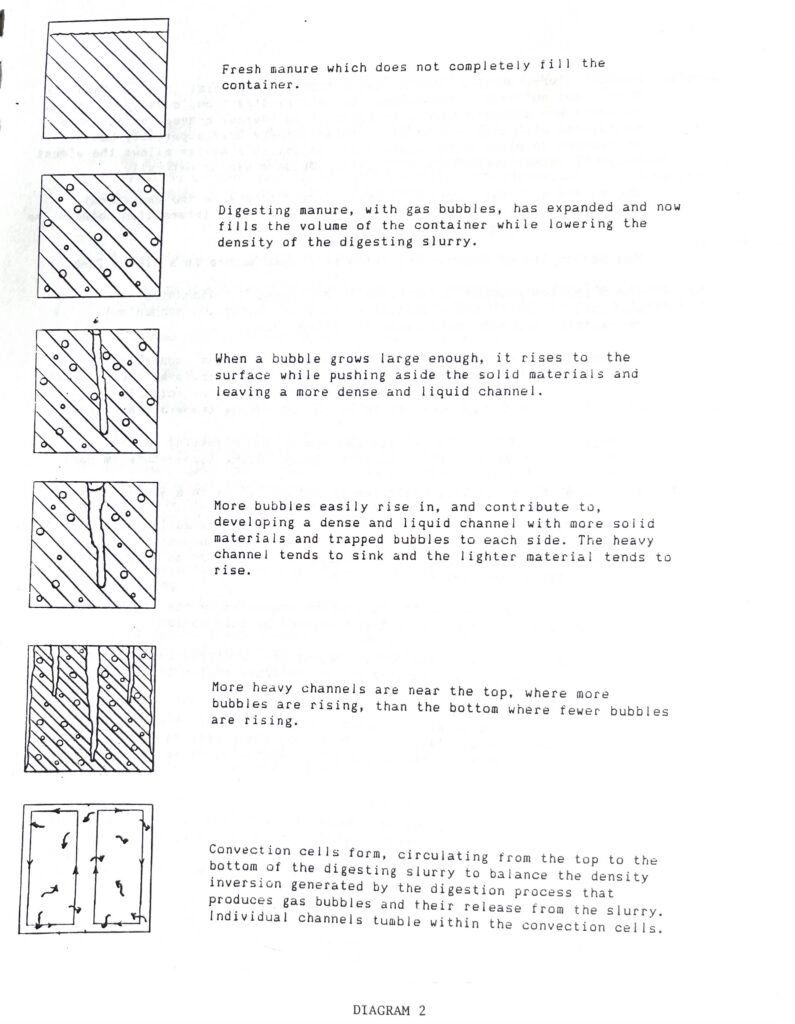
overall slurry motion. This mixing action and bacterial growth within the slurry are mutually reinforcing. (In optimal digestion, density inversion currents are actually more significant than thermal convection currents associated with digester heating. These effects have apparently been over looked by other researchers.) The natural-mix design allows the widest range of manure conditions to provide adequate mixing naturally.
The second and third laws of methane digestion define the mechanical characteristics of digesting manure and the dynamic interaction between the slurry and the bacteria.
The Second Law of Methane Digestion of Animal Manure in a Simple Tank
The digestion process is continually modifying the mechanical characteristics of the digesting manure. The important mechanical characteristics and their cause is listed below:
Viscosity
- Digestion converts materials to gasses, changing its composition and total solids, and therefore, the viscosity
- Generation of gas bubbles in the manure (minor)
- Warming the manure to the operating temperature (minor )
Density
- Generation of gas bubbles in the digesting manure
- Warming the sanure to the operating temperature (minor)
The Third Law of Methane Digestion of Animal Manure in a Simple Tank
The changing condition of the digesting manure causes motion which, in turn, reinforces the inoculation of the fresh manure and incubation of the bacteria. The dynamic interaction that results depends on many factors and can have three components.
1) The upward motion of the bubbles generated by the digestion process moves materials that are directly disturbed by this motion
2) Localized light and heavy regions are developed by the process of bubble formation and release where the heavy region tends to sink and the lighter regions tend to rise
3) The surface of digesting manures develops more heavy regions than the lower areas. Under favorable conditions these regions will spontaneously divide into a pattern of one or more “convection cells” that circulate in a closed loop
3. Digester design and operation: When the processes described above are thoroughly understood, a simple digester design can provide optimal efficiency. Loading location and rate for fresh manure can be established once the direction and velocity of currents dispersing fresh manure into digesting manure have been determined. The digester’s heating surfaces should be oriented within slurry currents to promote heat transfer efficiency. Section 3.2 demonstrates the use of a simple direct-fired heater that obviates the need for a costly and complex boiler and hot water loop recommended by others (see Koelsch, et al., 1980)m
Page 6
The subject of this research paper and the previous discussion is captured by the following theory:
David Smith’s Special Theory of Natural Mixing
The dynamic interaction of the natural processes of bacterial digestion and digesting manure behavior can provide efficient digestion of many manures with a simple design and low maintenance.
3. Verifying the Importance of Mixing
It can be concluded from the information presented so far that three basic parameters should be studied in the laboratory to define optimal mixing:
- The amount of mixing required for inoculation
- The effects of mixing beyond that required for efficient inoculation
- The potential for natural mixing provided by the digestion process itself
The procedures cited in this section of the report were designed and constructed by the author to independently analyze the fundamentals of methane digestion. To develop a more complete understanding of the importance and complexity of mixing, the first two parameters outlined above had to be isolated and studied separately. For this study, the laboratory was designed to:
- Define “zero mixing” by making the digester too small to mix naturally and provide gas removal from the digesting slurry without mechanical mixing
- Introduce fresh manure into the actively digesting slurry with a controlled amount of mixing to discover the optimal dispersion of the fresh manure for its inoculation
- Study the effects of further mixing (i.e., mixing beyond that necessary for inoculation) on gas production
- Observe the digestion process, its effects on the slurry, and the dynamics of natural mixing
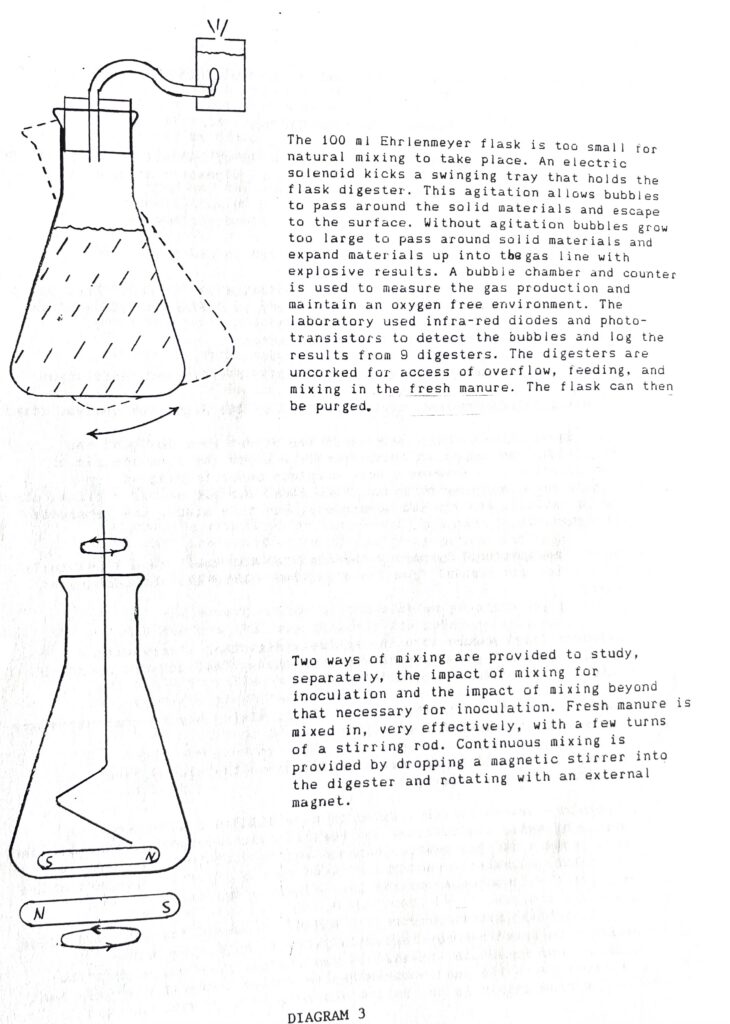
The laboratory system is illustrated on page DIAGRAM 1 with the five components of optimal digestion, and further expanded upon on page DIAGRAM 3.
3. The digesters and gas bubble chambers were placed in an acrylic forced-air incubator, allowing direct observation of the digestion process while stabilizing the temperature of the gas measuring system.
The first test, illustrated on page DIAGRAM 4 presents the gas production resulting from fresh manure mixed into actively digesting manure. A significant and immediate increase in gas production results when the liquids portion of the manure contacts the active bacteria (in this test with a low food supply in the active slurry). In this way, the gas
Page 7
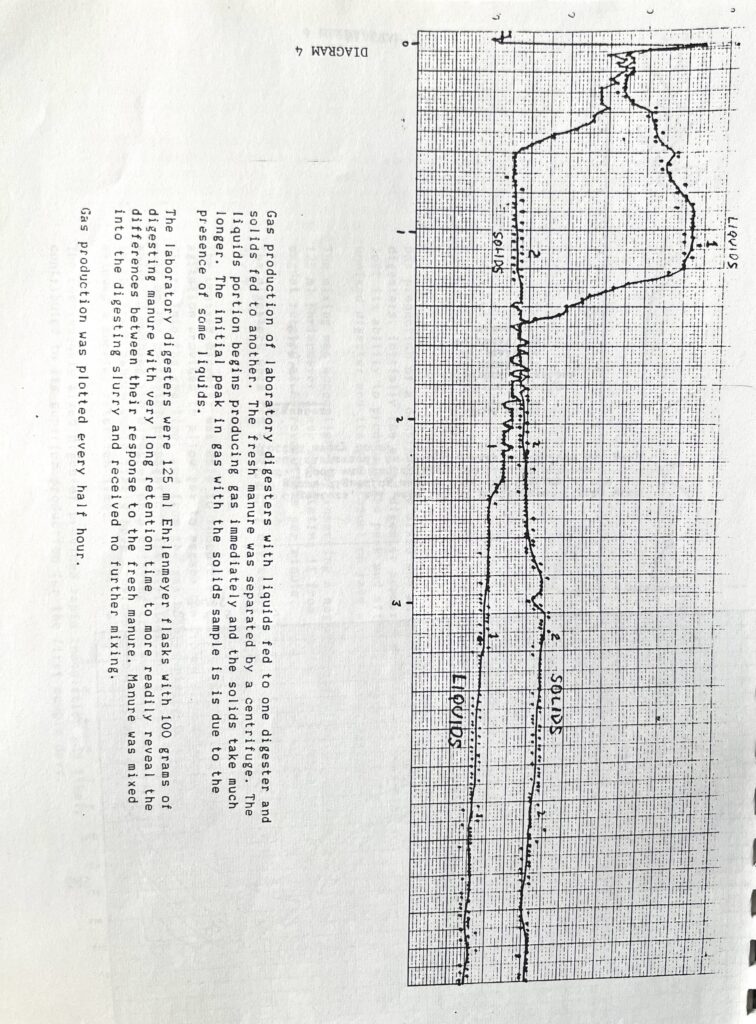
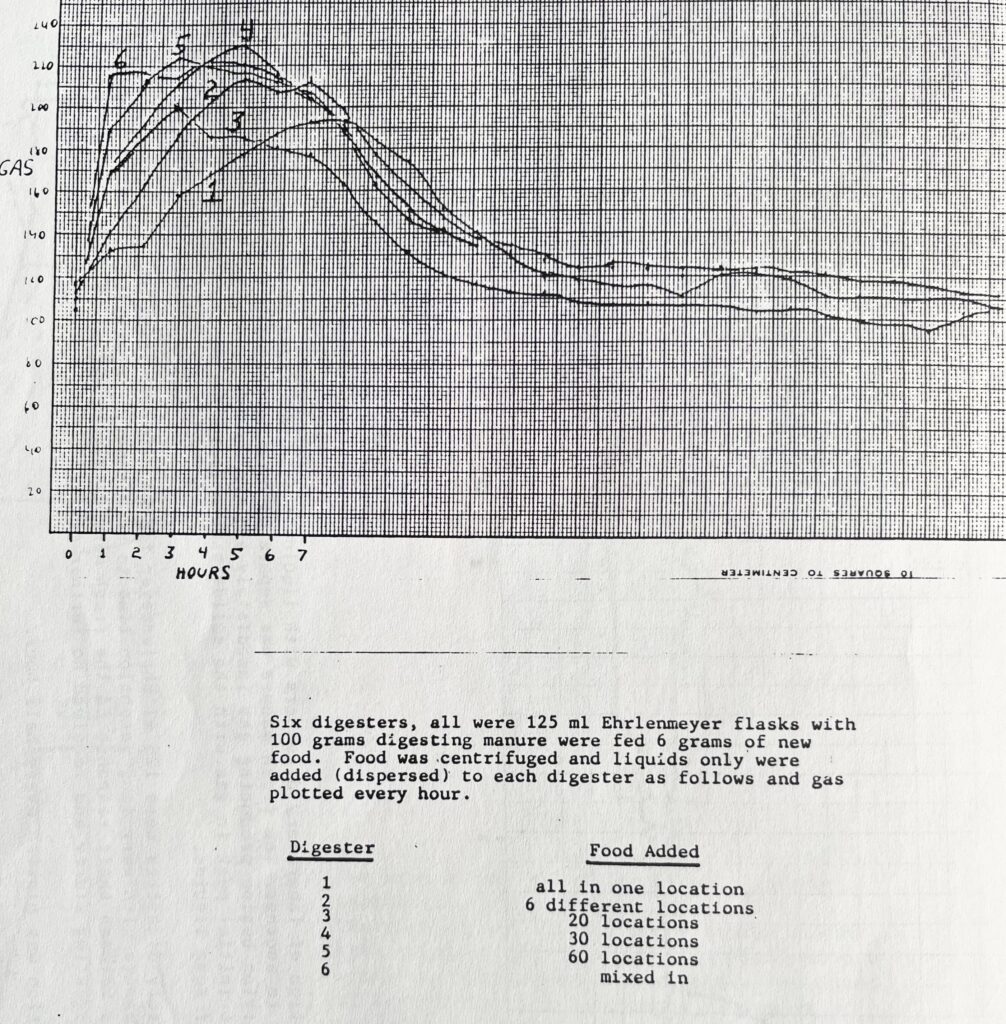
production indicates the contact between the fresh manure and the bacteria In the actively digesting slurry. As can be seen, the manure’s solid portion takes much longer to digest.
This technique was used to measure the dispersion (mixing) of fresh manure into actively digesting slurry necessary to initiate its digestion. Page DIAGRAM 5 shows that when six grams of fresh manure was dispersed in 60 different discrete locations in the 94 grams of active slurry, its digestion (compared to the digestion rate of manure mixed into the slurry) was delayed by two hours. When six grams of fresh manure was added in one discrete location, its digestion was delayed by six hours (due to the increased distance the bacteria had to travel and the time it took them to propagate and establish themselves in the fresh manure. Slight agitation of the manure was provided as the trays holding the digesters were “kicked” by electric solenoids. This allowed the escape of bubbles from the manure without using internal mixing (otherwise the bubbles would expand the slurry into the gas line). Since the slight agitation and gas bubble movement provided some mixing, the results presented here are only approximate, but are still quite revealing.
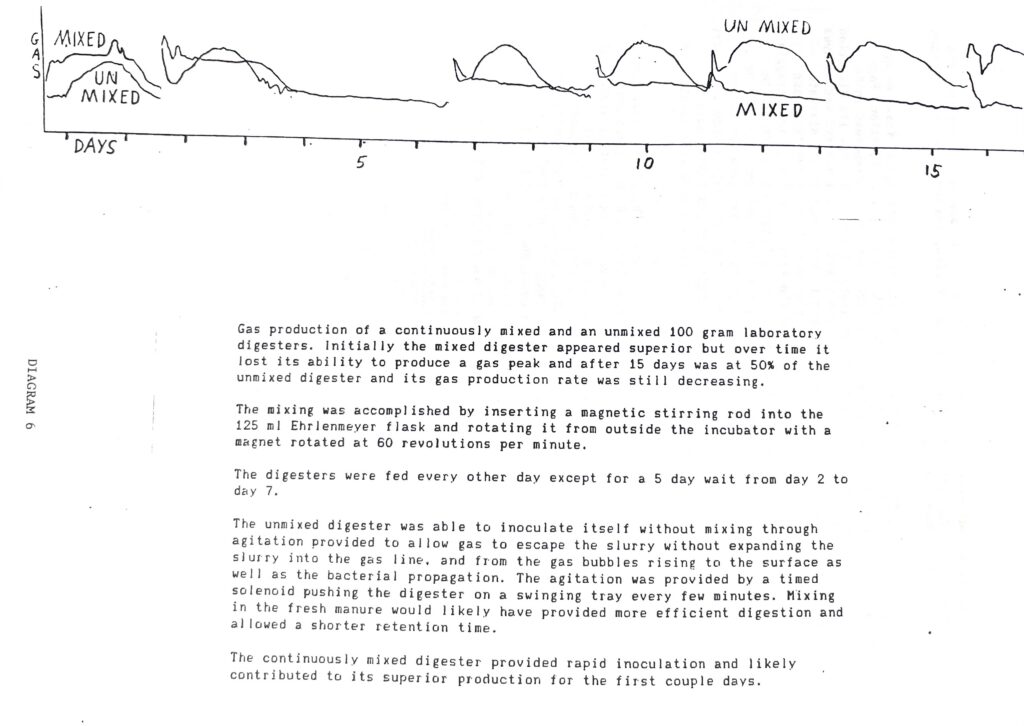
Page DIAGRAM 3 shows the apparatus used to measure the effect of mixing beyond that necessary for inoculation. Page DIAGRAM 6 is a graph and explanation of the detrimental effects of over-mixing digesting slurry. The full effect of this was not measured, as the gas production was still decreasing at the conclusion of the test. Further tests were conducted comparing test and control digesters. Both received optimal mixing for inoculation, but the test digester also received additional mixing, presented in Table 3.1 below. As can be seen, additional mixing reduced gas production.
Table 3.1 Effect of Additional Mixing on Gas production
| % Time of Mixing | Effect on Gas Production |
| 1% | 1% less gas |
| 7% | 6% less gas |
| 13% | 15% less gas |
| 50% | 25% less gas |
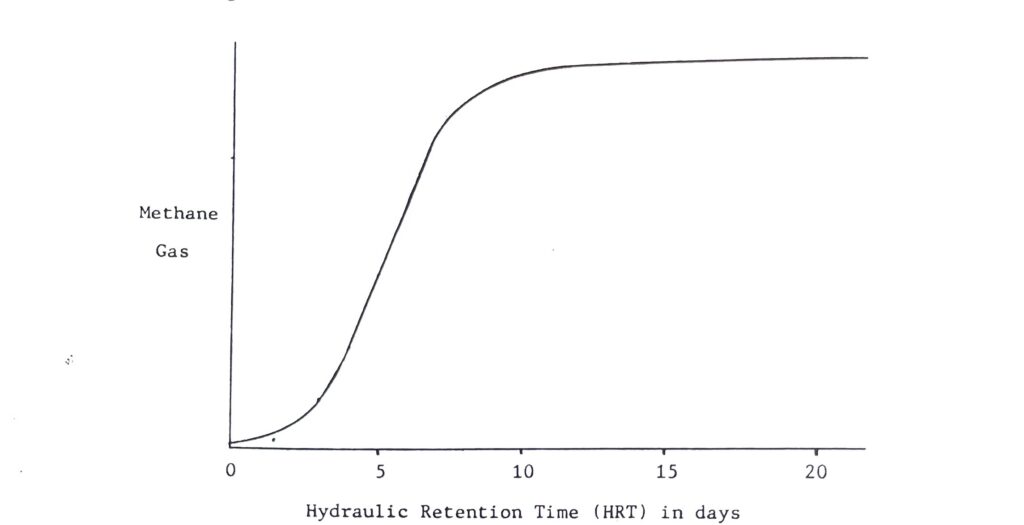
The last test indicates the potential increase in efficiency when inoculation was optimized and any further mixing was minimized. The digestion efficiency was improved showing that a smaller tank (HRT) can provide adequate digestion as shown in Figure 3.1. This graph was developed from just one test and may not accurately represent an average situation.
Each manure should be tested for optimal HRT as the composition (i.e. the gas potential of the liquids compared to the solids see page Diagram 4) of the manure may alter the results. However, it should be expected, as demonstrated here, that greater efficiencies will be provided at lower HRTS when digestion fundamentals are understood and the optimal environmental conditions are provided.
Page 8
Figure 3.1 Digestion Efficiency when Inoculation is Optlmized
A very simple laboratory test system consisted of an incubator and collapsible 1-liter polyethylene bags fitted with valved caps. Manure can be added to one or more bags according to the desired test, the cap installed and air expelled. The gas produced will expand the bag which can then be visually compared to others. For example, one can verify the benefit of mixing for inoculation and the harmful impact of additional mixing. Fresh manure can be carefully added to the first bag of digesting manure without any mixing. In the next bag fresh manure can be inoculated by gently squishing the bag until its temperature feels uniforn. The last bag can be treated as the previous bag but occasionally removed from the incubator and shaken vigorously (after gas production has expanded the bag to allow a good mixing effect). The results are not exact as, with the flask system, but adequate for comparison and determining the best strategy. Gas can be sampled through the valved caps. This very simple, and inexpensive test can verify the fundamentals of bacterial digestion.
3.1 Natural-Mix Test Digester
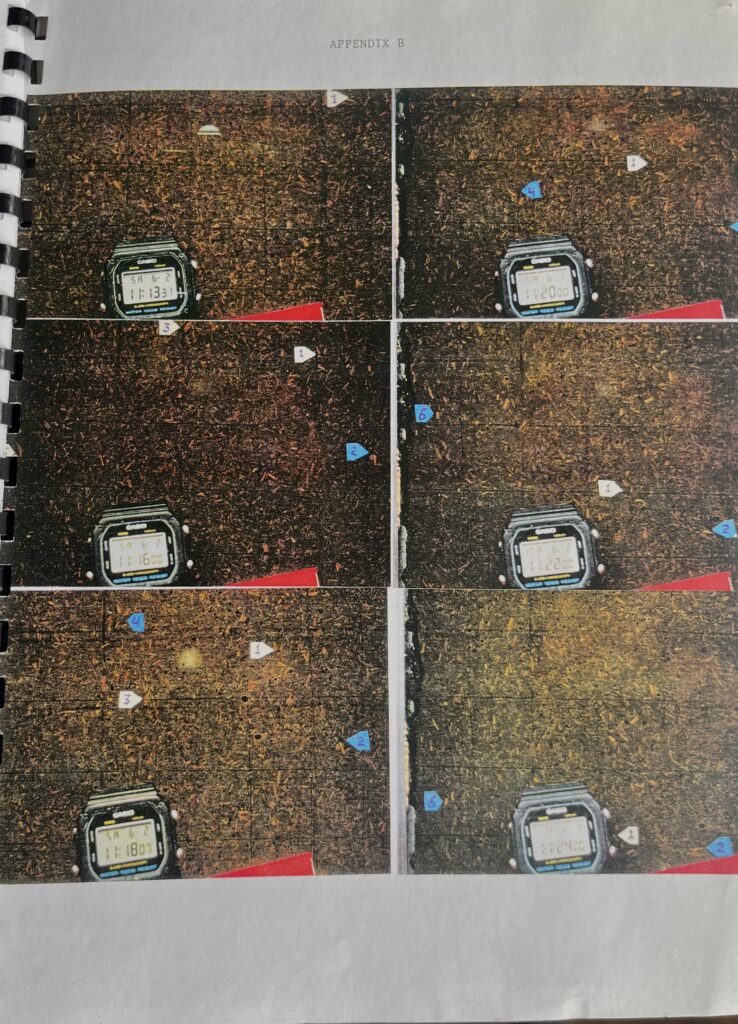
•The author built a natural-mix test digester to directly observe and monitor the mixing currents of digesting slurry throughout the digester. Based on the hypothesis that gas bubbles would generate currents in the slurry, direct observations of natural mixing would help clarify the performance of the Monroe and other digesters. The natural-mix test digester was not designed to provide optimal natural mixing, but to reveal the dynamics of natural mixing.
Digester Design
The simple rectangular tank was 4 inches deep, 2 feet wide and 4 feet high. The slurry volume was 2.3 cubic feet. The front panel (2 feet wide and 4
Page 9
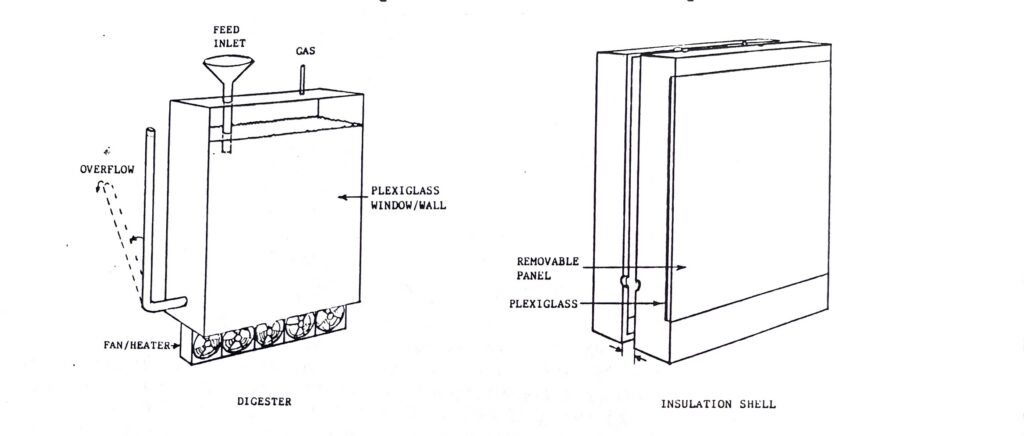
feet high) was made out of plexiglas so that most of the slurry could be directly observed. The digester has a removable exterior insulation shell, and heating was provided by a nicrome wire placed in front of five electric fans. The fans circulated warm air all around the digester inside the insulation shell. The front insulation panel was removable and exposed a plexiglas panel, allowing the observation of a 7 square foot area of digesting slurry while retaining the digester’s warm air flow.
Figure 3.2 Natural Mix Test Digester
Findings
The start-up of this digester allowed the observation of changes in slurry volume and corresponding slurry density. The cool, fresh manure initially filling the digester had the lowest volume. When warmed to the operating temperature, the volume increased slightly. Over the next day gas bubbles formed and were retained by the viscosity of the slurry and its inactivity.
This expanded its volume several times more than that caused by the increased temperature. With the onset of more efficient digestion and natural mixing currents, however weak, the volume was now reduced, but still much greater than its volume before bubble formation. This clearly demonstrated that slurry volume is more significantly affected by gas bubbles than by its temperature.
When fresh manure was added (12 days after initial filling) it could be observed through the window and was found to mix into the active slurry before sinking to the tank’s bottom. Generally, the slurry rose in the center of the tank, and sank down along the sides. Average slurry motion was about 1 inch per minute.
Slurry motion began, almost imperceptibly, three days after filling the tank and in 12 days, but before adding any fresh manure, averaged 1 inch in 5 minutes.
The author was surprised at the strength of the natural mixing currents in a small digester with such confined space for the slurry. When built it was
Page 10
assumed that it may be too small to allow any natural mixing currents, and a digester with greater volume would need to be provided.
3.2 300 Cubic Foot Pilot Scale Digester
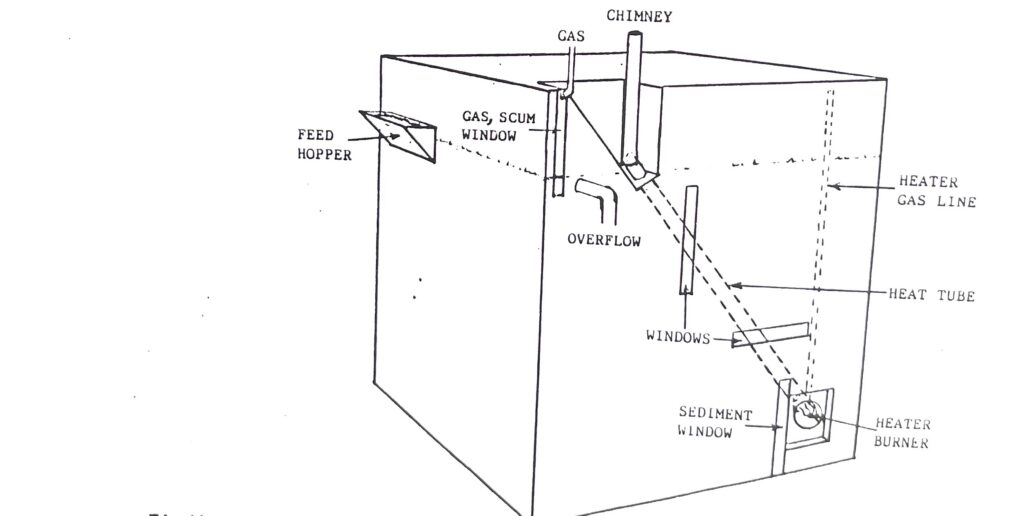
The author built a 300 cubic foot pilot-scale digester at Bill’s Dairy in Bothel, Washington. This digester was built in order to asses both construction techniques and digesting slurry behavior. The aspects of construction to be studied included a low-cost tank and heater, and a hopper for adding fresh manure. The slurry behavior of interest was the formation and motion of digesting slurry currents.
Digester Design
The digester’s tank was 7 feet long, 7 feet wide and 7.5 feet deep, with a slurry volume of 300 cubic feet. Loading was done through a hopper, obviating the need for a pump. Heating was provided by an aluminum pipe with access for a gas burner and air-flow installed at one end and exhaust at the other. The pipe was 2 1/4 inches in diameter, 0.022 inches thick and 5 feet long. This heating pipe and burner were placed near the plexiglas windows in the digester wall. The windows allowed direct observation of the slurry near the heating source, including the gas layer, active slurry and the sediment layer.
Figure 3.3 Pilot Scale Digester
Findings
The slurry motion in this digester was much more rapid than the slurry motion in the small test digester described above. The slurry moved at an average rate of 2 inches per minute, with strong downward currents visible at the windows near the heater. When currents were weak, heater operation caused slurry currents to reverse and to rise upward at all windows near the
Page 11
heater. It is important to remember, however, that the density inversions of natural mixing are usually stronger than thermal convection currents. Scum and sediment layer formation tended to occur at start-up, when slurry currents were poor; this formation occurred more slowly when slurry currents were strong and natural mixing was well underway.
To study a worst-case scenario” involving slurry adherence to the digester’s heater, propane gas was burned in the heater, along with all the digester gas produced. When the heating pipe and burner were removed following this, large amounts of slurry were stuck to the heater, but only where it was in contact with the motionless scum layer. (A scum layer formed during start-up as significant amounts of uncut straw bedding was in the fresh manure.) Small amounts of slurry adhered to the pipe, but only where the flame was in direct contact with the wall of the pipe. The exhaust temperature was only 250 degrees F when only the digester gas was burned and no increase in temperature was experienced that would indicate a decrease in heat transfer that would occur with digesting manure adhering to the heat pipe.
This digester’s hopper permitted loading the digester without the use of a pump, but did not optimize mixing into the digesting manure, as observed through the digester’s windows.
4. Complete-Mix and Plug-Flow Digester Designs and the Natural-MixAlternative
The two most popular methane digester designs for dairy manure, the plug-flow and complete-mix design, provide very different slurry conditions and bacterial environments. The coplete-mix digester requires that fresh manure be mixed into a completely mixed slurry with active bacteria. The unmixed plug-flow digester requires that fresh manure be added to one end of the digester tank. This manure is displaced to the opposite end of the tank with little intermixing, and manure and bacteria are relatively segregated from the rest of the slurry. This tends to isolate fresh manure from active bacterial populations, and the manure must incubate its own bacteria for digestion as it travels the length of the tank.
The bacterial and slurry conditions to be provided by each design are presented in Table 4.1 below.
Table 4.1 A Comparison of The Conditions to be Provided by the Two Popular Digester Designs
| Plug-Flow Digester | Complete-Mix Digester |
| Unmixed Slurry | Mixed Slurry |
| Incubates Bacteria in Fresh Manure | Inoculates Fresh Manure with Bacteria in Active Slurry |
This section presents the practical consequences and limitations of these digester designs and recommends an alternative: the natural-mix design concept.
Page 12
4.1 Complete-Mix Digester
The complete mix digester design was developed to provide high-rate digestion of municipal low-solids sewage. Low-solids slurries do require mechanical mixing, since the gas bubbles that form in these slurries easily escape to the surface and fail to provide mixing naturally. Without mechanical mixing, low-solids slurries separate, forming “dead spots”. These
“dead spots” reduce effective digester volume and efficiency, and necessitate periodic emptying and cleaning the digester tank.
The complete-mix digester usually consists of a circular upright tank with a mixer in the center. The mixer (used continuously or intermittently) completely mixes the slurry. The circular tank allows the mixer’s motion at the center of the tank to mix the entire slurry. Other mixing nethods include slurry or gas recirculation pumps. Digester gas is burned in a boiler or hot water heater, and the hot water is then pumped to a heat exchanger inside the tank, warming the digesting manure.
Figure 4.1 The Complete-Mix Digester
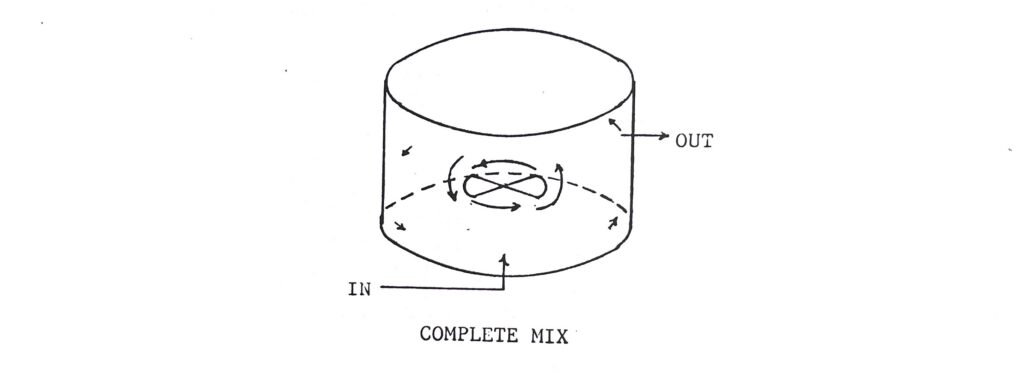
A mechanical mixing device, or impeller, must cause excessive mixing of the slurry near it to allow the motion that becomes progressively weaker at greater distances to be strong enough to mix the slurry in all of the tank.
For a detailed description of the complete-mix digester design, see Anaerobic Digesters for Dairy Farms by R.K. Koelsch, E.E. Fabian, R.W.
Guest, J.K. Campbell, an Agricultural and Biological Engineering extension bulletin #458 of Cornell University. This work contains information on fundamentals, siting, design, construction and operation of both plug-flow and complete-mix digesters for use on dairy farms.
4.1.1 The Monroe Digester: An Example of Complete-Mix Digester Design
The Monroe Digester at the Monroe State Prison Honor Farm in Monroe, Washington was designed by sewage treatment engineers as a high-rate, continuously mixed digester. Sewage treatment practices were adapted provide digestion of the manure from 200 cows.
Page 13
Digester Design
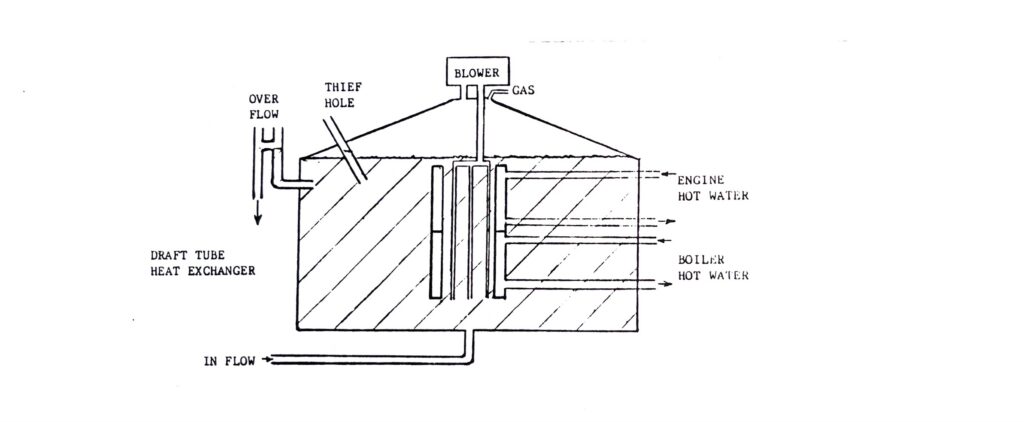
The digester consisted of two cylindrical tanks, 25 feet in diameter and 15 feet high, with conical roofs. The active slurry volume in each tank was 6,500 cubic feet. Each digester tank was designed to pump fresh manure to the bottom, and overflow near the top. A combination heat exchanger and draft tube with a gas blower was used to mix the slurry continuously and provide heating as necessary. Gas blown to the bottom of the draft tube lifted slurry into the draft tube (located directly above the inlet pipe) and circulated in the tank. The draft tube contained two water jackets, one for the boiler hot water on the bottom, and one for the engine generator at the top. The digester was fitted with sampling ports and a “thief hole” through the roof. Sensors placed in the ends of pipes inserted through the ports enabled monitoring of temperature and the simultaneous recording of six channels’ worth of data.
Figure 4.2 The Monroe Complete-Mix Digester (Original Design)
Digester Operation
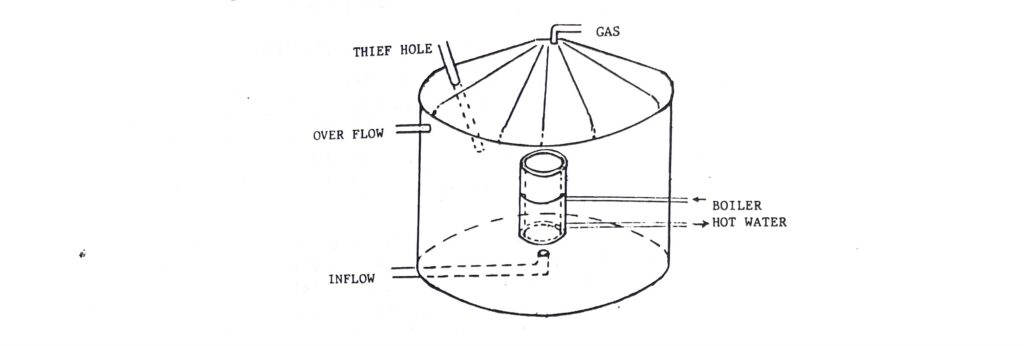
The digester was operated for two years from 1977 to 1979 by Ecotope Group under Department of Energy Contract Number EG-77-C-06-1016, and by farm personnel for another 5 years until 1984. The digester was significantly modified by Ecotope, and was successfully operated for over five years using natural mixing (Figure 4.3). The two major changes made to the Monroe digester’s design and operation are described below:
- Solids feeding was significantly increased from 8% to around 11% (the maximum possible for the manure handling system).
- Gas re-circulation mixing was reduced over time: continuous mixing was phased out and replaced by intermittent mixing; then intermittent mixing was replaced by mixing during loading only. Finally, mixer use was completely discontinued.
Page 14
These modifications improved digestion efficiency, and only one tank was necessary to digest all the manure from 200 cows.
Figure 4.3 The Monroe Complete-Mix Digester (Modified Design)
Findings
A complete description of the design and operation of the Monroe digester can be found in the projects final report Report on the Design and Operation of a Full-Scale Anaerobic Dairy Manure Digester by Ecotope Group September 1979, principal authors: Elizabeth Coppinger, Jack Brautigam, John Lenart and David Baylon.
The report concluded that the use of the gas re-circulation mixer was not necessary. Although there was no indication of slurry separation within the digester, when solids were below 7.5% in the effluent holding tank, there was some indication of a scum layer forming there. Coppinger et al. concluded that slurry separation would not occur if solids in the digester were above 7.5%. Page 1 of this report states:
Experiments showed that sufficient mixing occurs naturally in the tank due to natural convection currents and gas bubbling. No reduction in gas production or operational problems resulted from the elimination of gas recirculation mixing.
Baseline mixing studies (measuring the total solids of samples removed from the sampling ports and “thief hole”) were conducted to determine whether solids were stratifying within the digester tank. Although these studies showed uniformity, the method’s accuracy was poor. A more accurate – and revealing – method was developing accidentally.
The temperature variations within the digester were studied using a portable thermometer to determine the optimal temperature difference (dead-band) for turning the digester’s heater on and off. With a dead-band in excess of 1 degree Centigrade, the digester heater could remain on all of one day and off all of the next day; this caused the daily availability of gas for use in the creamery boiler to be unreliable. The temperatures were found to be the same (within the +/-0.1 degree Centigrade thermometer accuracy) everywhere in the tank (except where a probe was probably in direct contact with the fresh manure or sediment at the bottom of the tank). When thermal
Page 15
disruptions were introduced into the tank (when heating the digester or loading fresh manure), corresponding hot or cold “spots” would pass the probe, each causing a “spike” in temperature. Figure 4.4 shows the digester’s sample ports and thief hole locations used for the temperature study, and Table 4.2 presents the temperatures found.
Table 4.2 Temperature Study Results (Monroe Digester)
| Sample Port | Wall O’ | 2.5′ | 5′ | 7.5′ | Full 10′ |
| 1A | 35.1 | 35.1 | 35.1 | 35.0 | 32.2 |
| 1B | 35.1 | 35.2 | 35.2 | 35.2 | 35.2 |
| 1C | 35.1 | 35.2 | 35.1 | 35.15 | 35.15 |
The temperatures in degrees Centigrade were taken just before loading fresh manure into the 6,500 cubic foot Monroe digester and with the heater and mixer not used for a day. Measurements were taken by inserting a 10 foot long pipe with a sensor into the sample ports at the distances from the outside wall, as shown. Only Port 1A at 10 foot insertion showed any measurable variation (-3 degrees Centigrade), and was probably due to contact with the cooler sediment layer.
Based on the temperature data, the author built a temperature controller with a dead-band of 0.05 degree Centigrade, and with a thermal mass in the sensor to mininize response to the teeperature “spikes”. This precisely controlled the digester’s temperature (with minimal on/off heater cycling) so that daily digester heater use could be precisely predicted by the volume loaded and its temperature.
The uniformity of the temperature and the “spikes” after thermal disruption surprised the researchers, and further investigation was conducted. The uniform tank temperature indicated that efficient mixing was occurring within, even though the digester’s mixer and heater were off. The distribution of fresh manure (indicated by “cold spikes”) and manure warmed by the digester’s heater (indicated by “hot spikes”) throughout the tank further indicated mixing motion. None of the available literature suggested that thorough mixing of a digester tank’s contents was possible without the aid of a mechanical mixer. In fact, the designers of the Monroe digester favored continuous mixing to prevent slurry separation and stagnation.
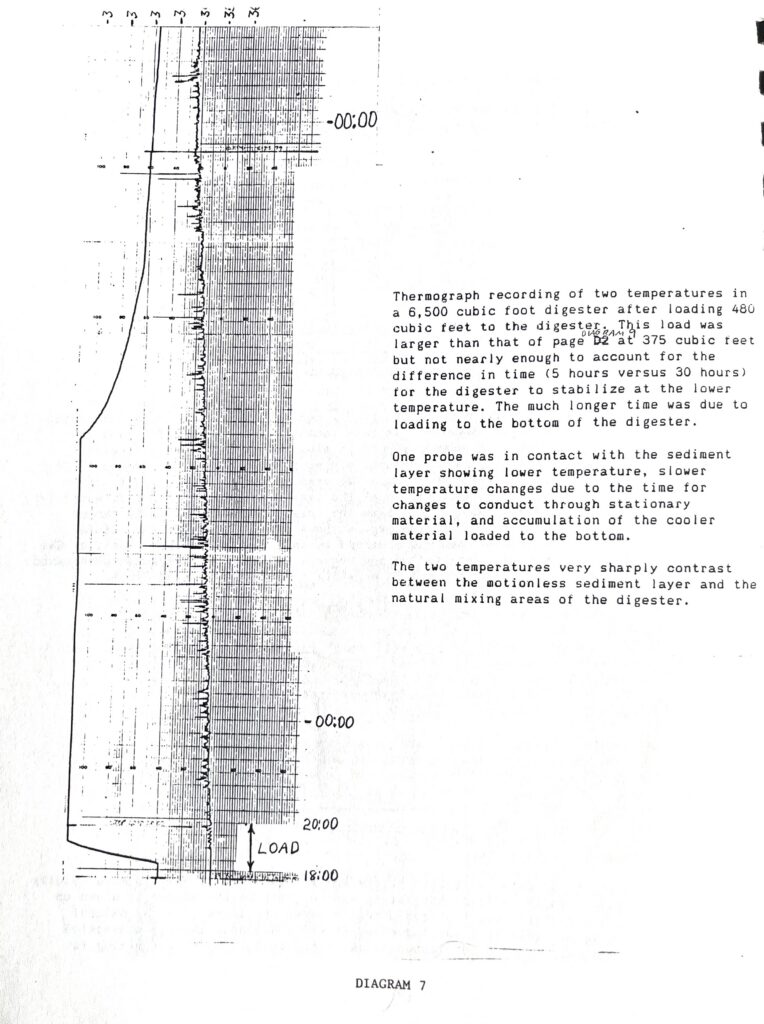
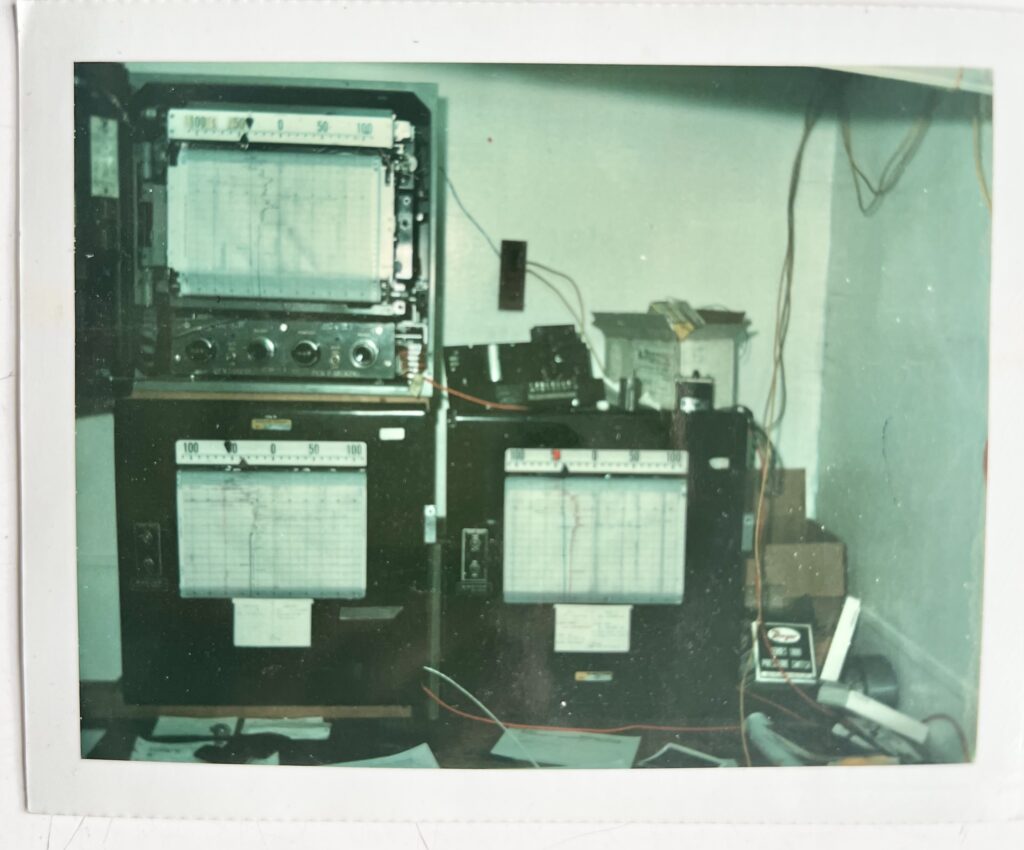
To investigate this phenomenon further, thermograph recorders were installed to monitor temperatures for a continuous profile of slurry motion in time, and therefore digester mixing. A number of heating and loading strategies were employed, and their effects on digester mixing studied. The study results are the most thorough and important documentation of digestion dynamics and natural mixing in a full-scale digester and are described here. The section on digester mixing from Coppinger, et al. is included in Appendix A. (The author of this report does not include external energy inputs such as heating to be natural mixing as Coppinger et al. does.) The mechanism causing the natural mixing was not understood by the Monroe researchers, and was attributed to the movements of gas bubbles (the only known activity inside the tank). The researchers were knowledgeable about thermal convection currents and attributed most of the mixing to such currents. They were unaware of the existence of “convection cell” currents
Page 16
caused by gas bubble induced density differences.
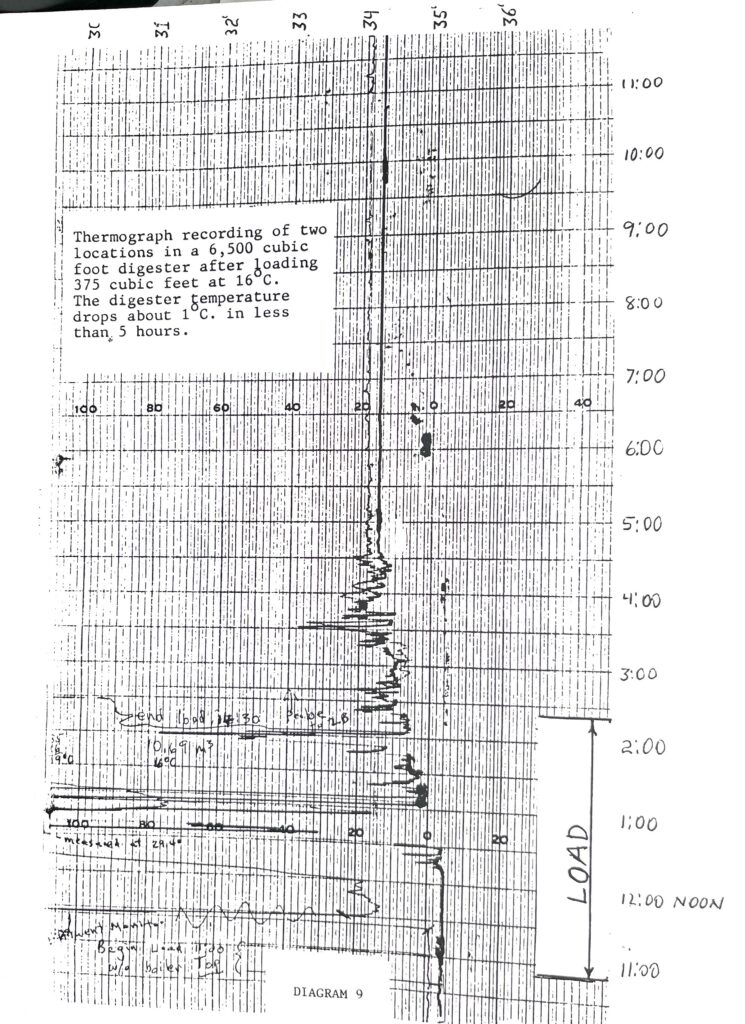
Figures 4.5 through 4.8 Illustrate the slurry conditions revealed by the temperature studies and thermograph recordings.
Figure 4.5

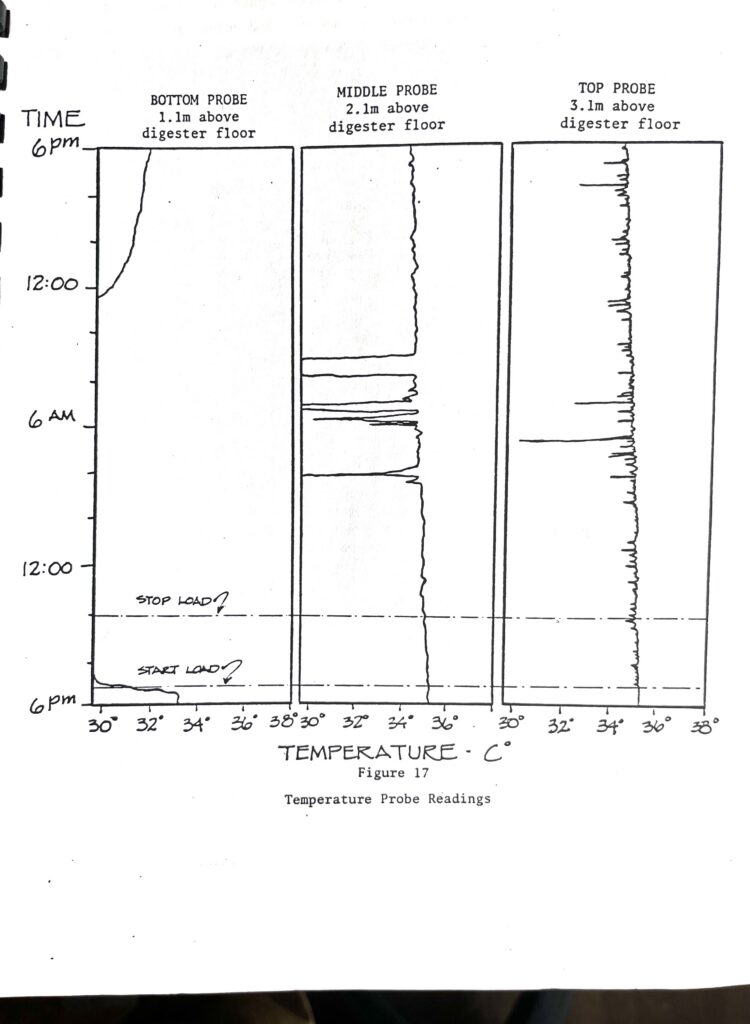
With the mixer and heater off, fresh, cool and heavy manure settled onto the bottom of the digester. In this location it is poorly involved in natural mixing, but eventually it is slowly mixed into the actively-digesting slurry with its natural mixing currents (see also Figure 17 in Appendix A). A temperature probe was used to reveal a sharp distinction between the fresh, cool manure at the tank’s bottom and the warm, actively digesting manure above. Over time the fresh manure would slowly become involved in the warm, active region above while the sharp temperature difference between them was observed to move toward the tank’s bottom. Gas production graphs and thermograph recordings documented digester performance during this process and are in Appendix A and pages DIAGRAM 7 & 8.
Figure 4.6
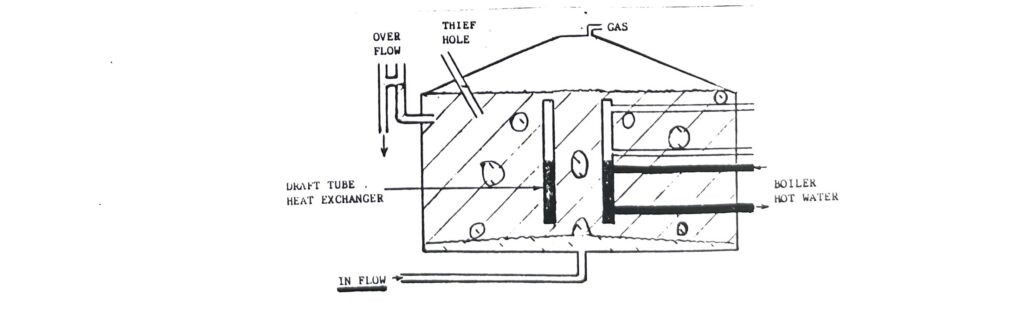
When the digester is heated by the boiler, the fresh manure is more readily drawn into the actively-digesting manure. More of the manure is drawn up into the draft tube (located directly above the inlet pipe) by natural mixing currents that are increased by the additional thermal convection dynamics. The remainder accumulates on the battom, where its mixing is
Page 17
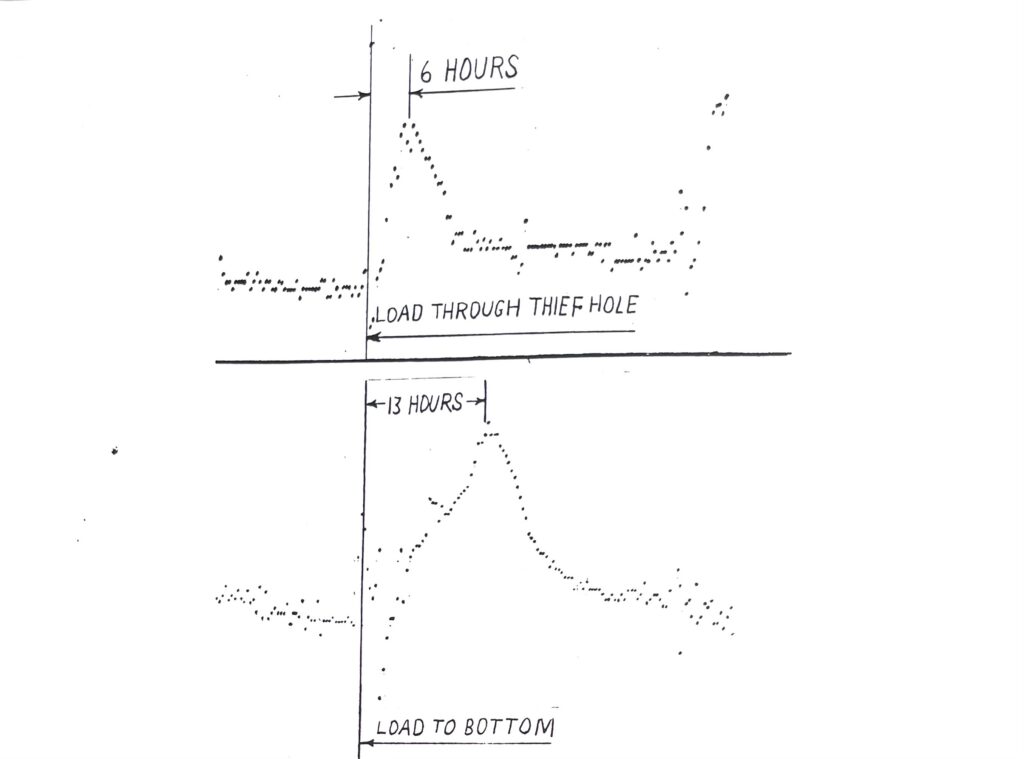
Gas production with loading through the thief hole in the top graph and loading to the bottom in the lower graph as in the thermograph recordings. Gas production was plotted every half hour in the top graph and every 20 minutes in the bottom graph.
When loaded to the bottom the gas peak was 13 hours after loading and when loaded through the thief hole the gas peak was only 6 hours later.
The gas peak is a result of the liquid portion of the manure producing gas immediately upon contact with the actively digesting slurry, and indicates indirectly the rate at which the fresh manure is mixed into the actively digesting manure. The solids portion of the manure digests much more slowly.
(Unfortunately, gas production and thermograph data was not available at the same times. Correspondence is approximate. Boiler was on during gas data but not temp.)
DIAGRAM 8
delayed (see Figure 15 in Appendix A).
Figure 4.7
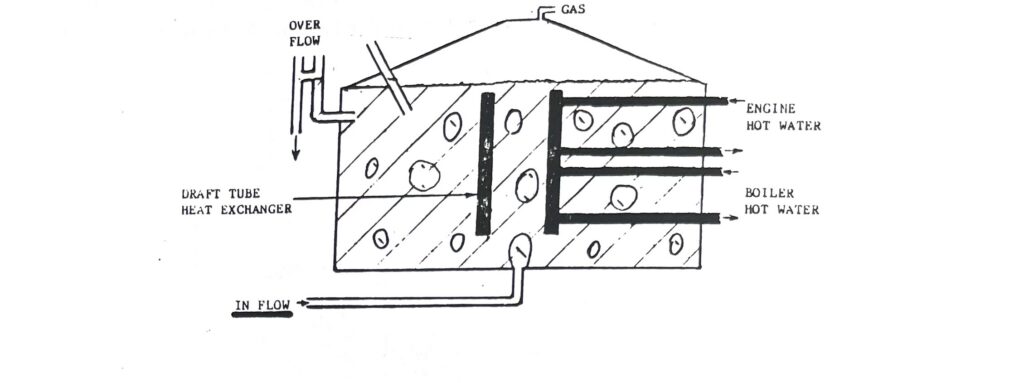
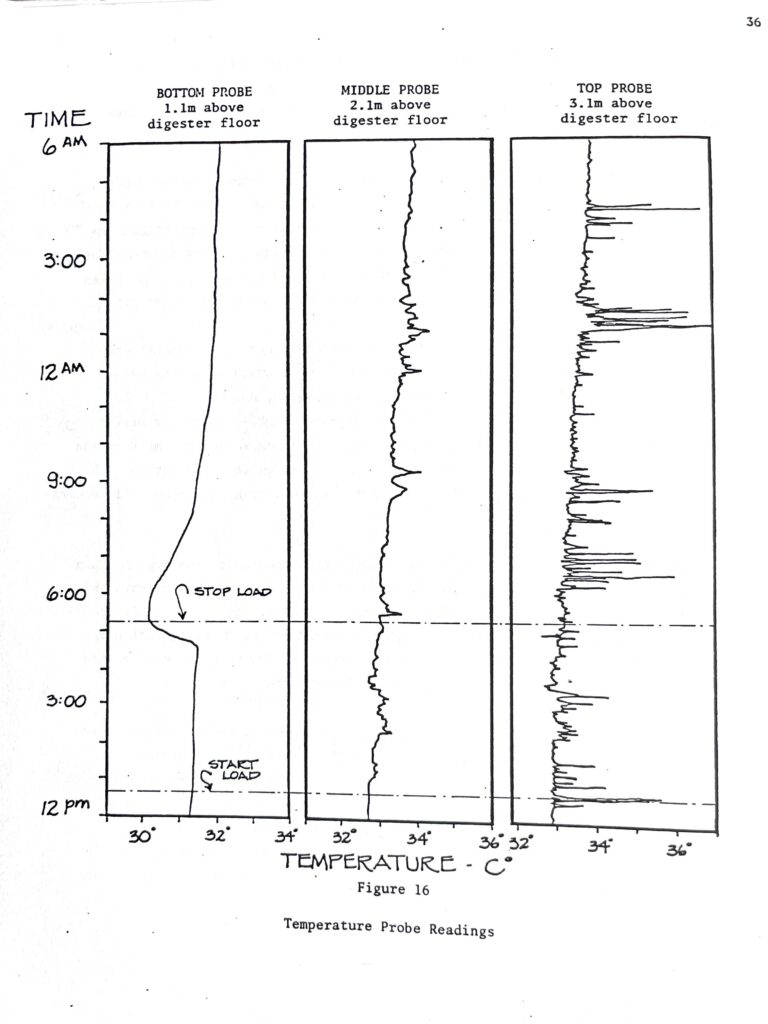
When the digester is heated by both the boiler and the engine generator, most of the fresh manure is drawn up into the draft tube by the increased thermal convection currents (see Figure 16 in Appendix A).
Figure 4.8
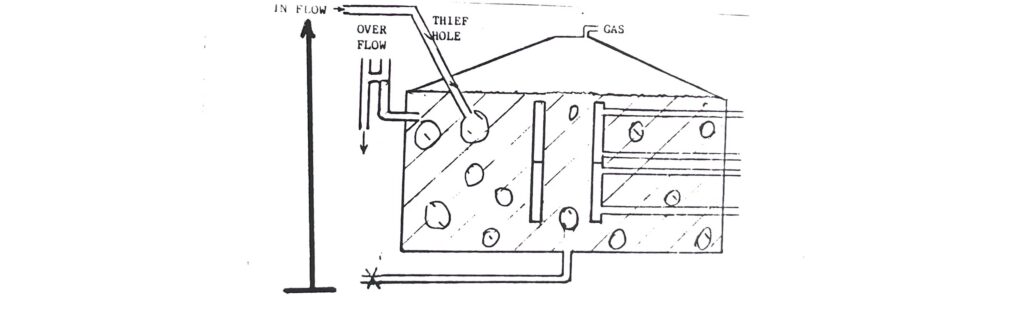
When fresh manure is added through the “thief hole” located near the top of the slurry and midway to the tank’s center, the fresh manure mixes more quickly into the actively-digesting slurry. With the mixer and heater off, forced mixing and thermal convection currents are absent; efficient mixing occurs due to the effects of bubbling gas and the “convection cell” currents produced by this process. (See Figure 18 in Appendix A, and page DIAGRAM 8 &
9.) The absence of bubbles in the fresh manure is more important than its temperature in determining the fresh manure’s density. This causes fresh manure to sink and become mixed into the circulating current of digesting manure. The Monroe digester’s design prevented continuous loading through the “thief hole”, so its efficiency in this natural mixing configuration was never measured.
When use of the gas recirculation mixer was decreased, and used only during the loading of fresh manure to provide mixing of the fresh manure into the
Page 18
active slurry, the digestion efficiency increased. When mixing was not used at all (delaying the inoculation of the fresh manure as in Figure 4.5) digestion efficiency decreased as shown in Figure 4.9, a comparison graph.
Figure 4.9 Volatile Solids Destroyed Plotted With Gas Recirculation Mixing Duration
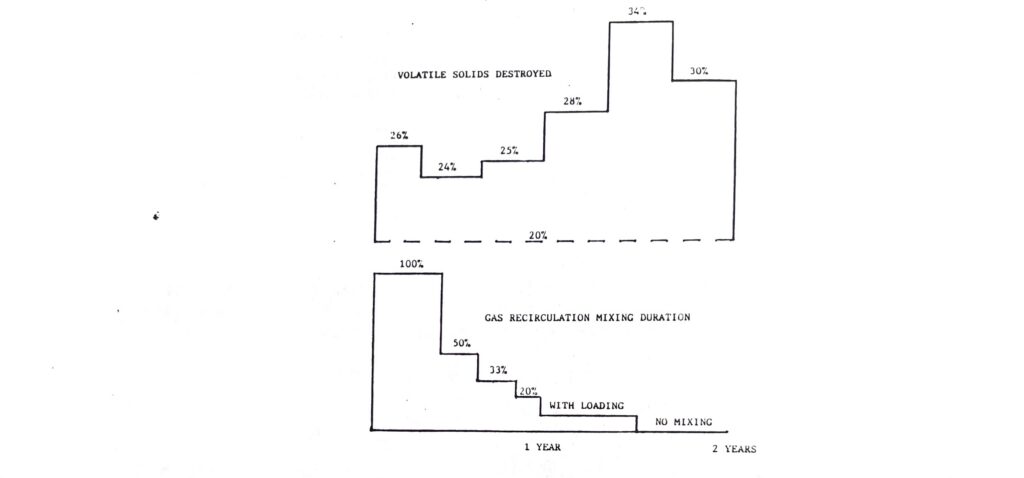
The Monroe researchers discounted the data in the graph above and attributed the increase in digestion efficiency, by speculation, to acclimation of the bacteria over time. The reports on mixing available to them found neither a significant decrease in gas production with mixing, nor an increase with mixing for inoculation (see section 5). Mixing in the case of municipal digesters is provided to increase digester efficiency by reducing dead spots and correspondingly increase the active volume of the digester.
Independent research discussed in section 3 reveals the correspondence of mixing, inoculation and digestion efficiency.
Note that when mixing is eliminated, except for inoculation, gas production significantly increases, but occurs at a later time. This finding is consistent with laboratory tests showing a delay in the effect on gas production caused by a change in over-mixing. In contrast, when the nixing for inoculation is changed, the response is immediate.
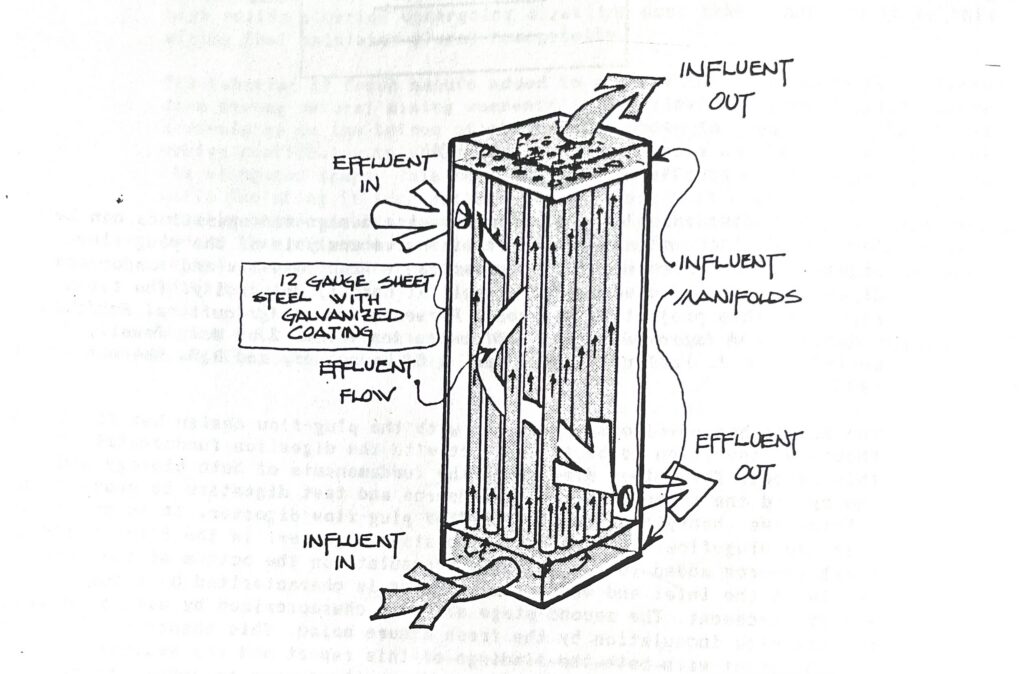
An important lesson was learned about flowing high solids manures through high cross sectional areas at low flow rates. Figure 4.10 shows a shell and tube heat exchanger that failed to exchange any measurable heat although it was expected to exchange 50% of the heat from the digester’s effluent flow to its influent flow. Coppinger et al. 1979, reported that the two manure flows failed to flow uniformly past the entire cross sectional path and became severely stratified with much of the cross sectional areas remaining stagnant. The lack of any measurable exchange of temperatures and the observation that large areas of the heat exchanger’s shell (in direct contact with the warm effluent flow path) became cool was the evidence for
Page 19
this conclusion. The reason given was the greater friction of manure slurries at lower flow rates causing manure to flow along a small path of least resistance. Tests of exchangers with very small cross sectional area did not have this problem and allowed the manure to flow in a uniforn pattern.
Figure 4.10 Monroe Digester Shell and Tube Heat Exchanger
4.2 The Displacement or Plug-Flow Digester
The displacement or plug-flow digester was developed to digest materials with a higher solids content than municipal sewage, such as farm animal manures. A farm digester must be simple and cost-effective. The elimination of in-tank mixing, while still providing efficient digestion with a ninimum of maintenance is essential.
The plug-flow design does not employ a mixer. Many animal manures are available in high solids, and the plug-flow design requires that these viscous manures be displaced along an elongated tank with minimal, if any mixing. This design aims to prevent the premature or overdue discharge of manures mixed together (which appears to occur in mixed-tank digester designs). Another goal of the plug flow design is to retain manure until digestion is complete. It is further theorized that the digestion would proceed through stages with the acid forming bacteria active near the inlet end of the tank followed by the methane forming bacteria, and finally complete digestion at the outlet end of the tank.
Page 20
Figure 4.11 Plug-Flow Digester Design

A complete discussion of plug-flow digester design and operations can be found in Koelsch, et al.. The most extensive analysis of the plug-low digester’s performance and its comparison to complete-mix and random-mix digesters was conducted by Bill Jewell at Cornell University. The final report on this project is Angerobic Fermentation of Agricultural Residue:
Potential for Improvement and Implementation Volume 2 by W.J. Jewell, S.
Dell’Orto, K.J. Fanfoni, T.D. Hayes, A.P. Leuschner, and D.F. Sherman April 1980.
The author has no direct experience with the plug-flow design but finds its theory of operation to be in conflict with the digestion fundamentals of this report. The author draws upon the fundamentals of both biology and slurry and the observations of the Monroe and test digesters to propose an alternative theory of operation for the plug-flow digester. It is proposed that the plug-flow digester is a two stage digester. In the first stage the fresh manures added to the digester accumulate on the bottom of the tank, mostly at the inlet end where its behavior is characterized by incubation and displacement. The second stage above is characterized by natural mixing and its slow inoculation by the fresh manure below. This theory is shown to be consistent with both the findings of this report and the evaluations of plug-flow digester performance reported by others such as Jewell et al..
If the manure does flow as a plug, as intended by the plug-flow design, the limited bacterial mobility shown in Section 3 and page DIAGRAM 5 would isolate each day’s fresh manure. This manure would then have to incubate its own bacteria for digestion, and the plug-flow digester’s performance would be almost the same as a batch digester’s performance.
Since the performance of plug-flow digesters is superior to batch digesters, the slurry in plug-flow digesters must be mixing enough to provide for some inoculation. As stated before, there are only two ways that high bacterial populations can develop in fresh manure inside a simple tank: through incubation or through inoculation. Inoculation, which requires mixing, establishes such bacterial populations much more expediently than does incubation.
Mixing is necessary to provide a homogenous mixture of the digesting slurry, and prevent slurry separation and the development of inactive areas in the tank. A plug-flow digester has a large cross sectional area and very low
Page 21
flow rates. Section 4.1 discusses the slurry stratification that developed within a heat exchanger. With the digestion process continually modifying the slurry viscosity and density, it seems very unlikely that a uniform cross sectional flow could occur in a large tank with its great cross sectional area, low flow rate, and slurry of different densities and viscosities. The practical situations, from the 2.3 cubic foot test digester to the 6,500 cubic foot Monroe digester, clearly demonstrate that mixing of high solids slurries undergoing digestion does take place and it is this mixing that maintains slurry homogeneity.
The behavior of fresh manure added to a digestion tank where it is isolated from strong natural mixing currents is described in section 4.1.1, where it accumulates on the bottom of the tank as shown in Figure 4.5. The plug-flow design contributes to the accumulation of manure on the tank’s bottom with its elongated shape. This concentrates the effects of the dense fresh manure while isolating it from activity in the tank that would allow it to more readily become actively involved in the high rate digestion process. Fresh manure then displaces previous day’s manure (now lighter with gas bubbles) up and outward with with most of the fresh manure remaining at the tank’s inlet end.
Figure 4.12 Variations of pH, Gas Production, and Fresh/Active Manure Along the Length of a Plug-Flow Digester
The interaction of incubating fresh manure and active inoculated slurry above was described in section 4.1.1 and illustrated in Figure 4.5. In the plug-flow digester, there is an imbalance between the active manure with its bacteria and the fresh manure at the bottom of the tank. The inlet end has little active manure, and most of the fresh manure; but the outlet end has little or no fresh manure and the nutrients for the bacteria vary along the length of the tank. The elongated tank and poor inoculation slows the ability of the natural mixing currents to counteract this imbalance. The inlet end of the plug-tlow digester has low inoculation, low pH, and less
Page 22
gas production to provide natural mixing. These digestion dynamics increase the accumulation of fresh manure on the bottom of the plug-flow tank. Only the middle portion of the plug-flow digester’s tank will have optimal inoculation, gas production and natural mixing rates. This results in the appearance of a progression of digestion conditions along the tank, with acid formers causing lower pH towards the inlet end, methane former with gas bubbling in the middle, and complete digestion with decreased gas bubbling when overflowed.
Examined from this perspective, the plug-flow digester is a two-stage digester. The first stage consists of bacterial incubation and displacement of recent manures, with fresh manure spreading out on the bottom of the tank from the inlet end. The second stage is an inoculation and natural mixing stage, occurring in the slurry above the manure layer on the bottom of the tank.
The accumulated fresh manure with its incubation-defined activity digests inefficiently, and contributes little to the overall digestion and gas production rate. It displaces actively-digesting manure, causing a reduction in effective digester volume that reduces digestion efficiency.
The plug-flow digesters heater placement is also problematic. The heater is located at the bottom of the plug-flow tank, where inactive slurry is located. This limits heat transfer efficiency, and may overheat and damage the bacteria too close to the heater surface. This can cause slurry
separation and sedimentation and manure may adhere to the tank’s heater.
To its credit, the plug-flow digester design does not require a mixer. This reduces its operation and maintenance costs over the complete-mix design and is probably why it has become the most popular digester for use with farm animal manures.
4.3 The Natural-Mix Design Concept
The natural-mix design concept was developed to improve the viability of farm animal manure digestion, and to allow the wider application of this technology. The application of current methane digestion technologies has been limited to special interests and projects funded by grants. Successful operation of these projects has been marginal.
This design concept evolved from the author’s investigation into conflicts in methane digester design. The Monroe digester operated in a very surprising manner: its designers provided mixing to improve digestion, the digester provided mixing naturally. In addition, its mixer failed to improve digestion, and was later shown to be harmful to digestion. In the case of complete-mix and plug-flow digesters, designers had developed strategies completely different from one another.
The author’s efforts to resolve these conflicts has resulted in the identifications and discoveries of this report that are the basis of the natural mix design concept and are reviewed here:
- The fundamentals of biology and the supporting environmental conditions
- The fundamentals of slurry mechanics and slurry behavior
- The interaction between biology and slurry that provides mixing naturally which, in turn, provides the best environment for the growth and propagation of the bacteria.
With these processes understood, one can conceive the design and operation of an efficient and simple methane digester utilizing natural mixing. It would consist of the following components:
- A simple tank that allows slurry currents
- A simple heater designed so that slurry currents efficiently transfer heat
- An operational system that adds water to the manure, if necessary, and adds the fresh manure to the digester so that the slurry currents efficiently inoculate the fresh manure with bacteria-rich slurry
- An optimal size of digester tank (HRT) for digestion and slurry dynamics
Analysis of the Monroe digester and laboratory tests suggest that a natural mix design would compare to a plug-flow digester as shown in Figure 4.13.
Figure 4.13 Comparison of plug-flow efficiency with a maximized inoculation strategy
The modified Monroe digester and others reported in Methane Recovery from Animal Manures: A Current Opportunities Casebook by P. Lusk, December 1994, do not have mixers and depend on natural mixing for their operation. Their designers are apparently not aware of the full impact of natural mixing and often attribute their slurry mixing to thermal convection currents. The author does not consider these digesters to be a natural mix design as they do not fully understand and utilize natural mixing.
5. Other Reports and Studies of Digester Mixing
Other researchers have studied mixing in methane digestion by installing a mixing device and measuring its effect on gas production such as Stafford and Hashimoto discussed here. These measurements have been taken on digester utilizing both continuous and intermittent mixing. Historically, these researchers have not made a distinction between the mixing necessary for inoculation and mixing in addition to that necessary for inoculation. Only
24
the research by Ecotope, is known by the author to have addressed the issue of natural mixing in any way (see Coppinger et al. 1979) and this report documented only partially the existence – and not the effects – of natural mixing.
Hashimoto’s investigation of mixing
An example of some of this research is the work conducted by Andrew G. Hashinoto, documented in his report entitled The Effect of Mixing Duration and Vacuum on Methane Production from Beef Cattle Waste (1981). Hashimoto tested the hypothesis of Finney and Evans (see Finny and Evans, 1975) that gasses produced by digestion inhibit methanogenic bacteria, and that vigorous agitation will improve methane digestion rates. He noted, however, that Ecotope’s Coppinger, et al. (see Coppinger et al. 1979) reported no decrease in gas production when mixing was discontinued.
Hashimoto conducted the following tests to determine the impact of mechanical mixing on methane digestion:
Thermophilic (!)digestion was initiated and maintained in 4 liter digesters.
Mixing was provided at a rate of 220 rpm at 1, 2, 3, and 24 hours per day, and at 3, 4, and 6 day HRT.
Findings
Hashimoto’s conclusions were that continuous mixing resulted in small increases in gas production (but a slightly larger increase with the shorter HRT) that could not be justified by the increased energy required for continuous mixing. He suggested that the minimum mixing requirement might be based on materials handling (limiting slurry separation and scum and sediment formation) that would, over time, reduce the digestion efficiency by reducing effective digester volume. Further study was recommended on this issue.
Author’s Comments
Continuous mixing may have improved digestion efficiency by improving inoculation of the fresh manure.
The greater mixing requirement of the short HRT test (greater ratio of viscous fresh manure to mix into the active slurry) may be the cause of a greater increase in gas production with continuous mixing.
No mention is made of the timing of loading the fresh manure and the intermittent mixing, and no distinction is made between mixing for inoculation and any further mixing. No mention is made of any mixing that might occur naturally and its impact on inoculation.
The author failed to find a similar harmful effect of mixing beyond that necessary for inoculation with thermophilic bacteria that was found with mesophilic bacteria. It cannot be assumed that mixing will have a similar aftect with the two different groups of bacteria.
5.2 Stafford’s Tests
Page 25
D.A. Stafford conducted experiments to demonstrate the effects of stirring rates between 140 and 1,000 rpm with intermittent mixing on sewage sludge, as documented in The Effects of Mixing and Volatile Fatty Acid Concentrations on Anaerobic Digester Performance, presented at the Biomass Conference in 1982 (see also Finney and Evans, 1975). Stafford used 3-liter mechanically-mixed digesters with a 10-day HRT and a semi-continuous feed.
Findings
Overall gas production was found to be slightly lower with the higher mixer speeds. Stafford also monitored gas production during the first few seconds with the onset of mixing (made possible as mixing was provided in an intermittent pattern. In all cases the higher mixer speeds provided the greatest increase in gas production with the onset of mixing, although overall gas production was reduced at the higher mixing speeds.
Author’s Comments
The lower overall gas production at the higher mixer speeds may have resulted from mixing beyond that necessary for inoculation. (Hashimoto’s tests were 220 rpm.) Stafford does not mention the duration of the tests, a critical factor demonstrated by the author in lab and full scale tests of over-mixing.
The increase in gas production at the onset of mixing (with a greater increase with higher mixer speeds) could he attributed to the beneficial effect of mixing for inoculation. Like Hashimoto, Stafford does not mention the timing of semi-continuous feeding of the digester with the onset of mixing, and this information is crucial for a rigorous assessment of digester dynamics in this research.
5.3 W.J. Jewell: Plug-Flow Research With Comparison to Complete-Mix and Random-Mix Digesters
Beginning in 1974, Bill Jewell began a comprehensive investigation into a cost-effective, easy-to-operate digestion technology for use in dairy farms. Jewell’s efforts focused on the plug-flow digester and its operating requirements. Little was known about these requirements, and Jewell’s research included laboratory, and pilot scale digesters. Eventually Jewell designed and built a full-scale plug-flow digester, and this was operated next to and compared with a conventional complete-mix digester. For a complete discussion of these efforts, see Anaerobic Fermentation of Agricultural Residue: Potential for Improvement And Implementation Volume 2 by WJ. Jewell, S. Dell’Orto, K.J. Fanfoni, T.D. Hayes, A.P. Leuschner, D.F. Sherman, April 1980.
Findings
1. The plug flow digester consistently out-performed the complete-mix digester, but a random (limited) mix digester out-performed the plug flow
Page 26
digester.
- Tracer studies demonstrated some degree of plug flow conditions, but mostly when operated with a shorter (15 day) HRT. Samples of digesting slurry were taken from the inlet, middle, and outlet end of the plug-flow digester and the total gas potential of the samples was found to be less toward the putlet end. This provided convincing evidence for actual plug-flow conditions.
- The plug flow digester was the simplest and easiest design to work with
- The plug-flow digester has more problems with slurry separation
Author’s Comments
The report does not mention or evaluate:
- Inoculation
- Any benefit of mixing for inoculation
- Mixing having a harmful impact on the bacteria of actively digesting manure
- Natural mixing causing a complete mix condition
- Behavior of fresh manure that would cause it to become a distinct and separate component within the digester
The plug flow digester most likely out-performed the complete-mix design (with a slurry re-circulation mixer) due to the harmful effect of mixing beyond that necessary for inoculation.
The random or limited-mix digester most likely out-performed the others by providing better mixing for inoculation than the plug-flow digester while minimizing the harmful effect of mixing beyond that necessary for inoculation that takes place in the complete-mix design. (The random-mix digester was generally mixed for one hour after loading, which may have aided inoculation without too much over-mixing.)
The Author would like to see more studies of plug-flow conditions but based on a more complex understanding of bacterial and slurry behavior that could be explained by a division of the slurry into two distinct regions, the first providing a displacement condition of the fresh manure and a mixed condition of the actively digesting manure. The conclusion that a single, contiguous flow of manure as the explanation of the observations reported in Jewell et al. 1980 is in conflict with the digestion fundamentals and slurry conditions understood and observed by the author.
Page 27
APPENDIX A Ecotope final report 1979
6. Digester mixing
Based on municipal sewage treatment problems with scum formation, the Monroe digester was designed to be continuously mixed. A Rootes-type recirculation blower was used in conjunction with an internal draft tube that doubled as the system’s heat exchanger. During the first five months of operation in 1977, the blower ran continuously. The electrical demand of the blower was 180 kWh per day, representing 90% of the total electric demand of the system. The blower also required costly repairs during the time of its operation, as well as routine oil changes each week.
Table 1. %TS of Digester Contents in Mixing Studies, 1978.
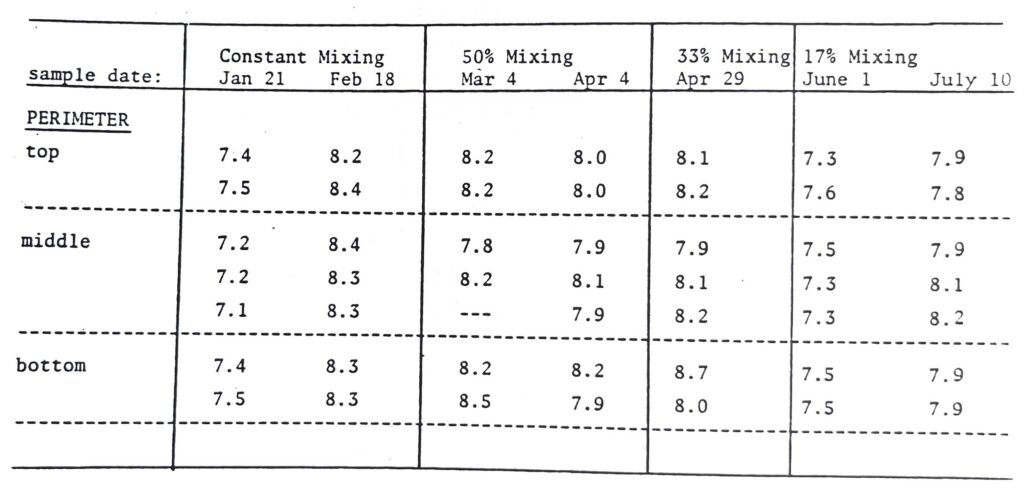
Intermittent mixing was investigated in order to reduce electrical consumption and equipment wear. Baseline mixing studies were performed to determine if solids stratification occurred in the tanks. No samples differed more than 0.7% TS (Table 1). Mixing was decreased to 15 minutes on and 15 minutes off.
No increase in solids separation resulted. Mixing was decreased to 10 minutes on and 20 minutes off, then to 10 minutes on and 50 minutes off, with no significant stratification and no negative impact on gas production. Stratification tests and operational experience have shown that solids separation is dependent primarily on the % TS of the slurry. If the % TS in the tank dropped below 7.5 % TS, scum formation became a problem in the effluent holding tank.
32
Temperature probes were then installed in a variety of locations throughout the tank to provide a more instantaneous monitor of the movement of manure in the tank. Blower use was again reduced to loading periods only. Under these conditions, a uniform temperature drop was seen throughout the tank, indicating that the blower effectively disperses the influent during loading. Use of the blower only during loading was continued from May 1978 through early March 1979, with no negative impact on gas production or operational problems.
Mixing was discontinued on March 6, 1979. Temperature probes in the digester showed that mixing still occured in the tank without mechanical agitation due to convection currents and gas movement. A number of heating and loading configurations were investigated to examine the impact of these changes on digester mixing. Cold manure can be loaded to either the top or the bottom of the digester. Heating can be provided from the boiler, the internal combustion engine, or both. Hot water from the boiler circulates through the bottom of the heat exchanger; hot engine cooling water circulates through the top. If both the boiler and I.C. engine are used, heat exchange area is doubled and the hot water flow rate is substantially increased.
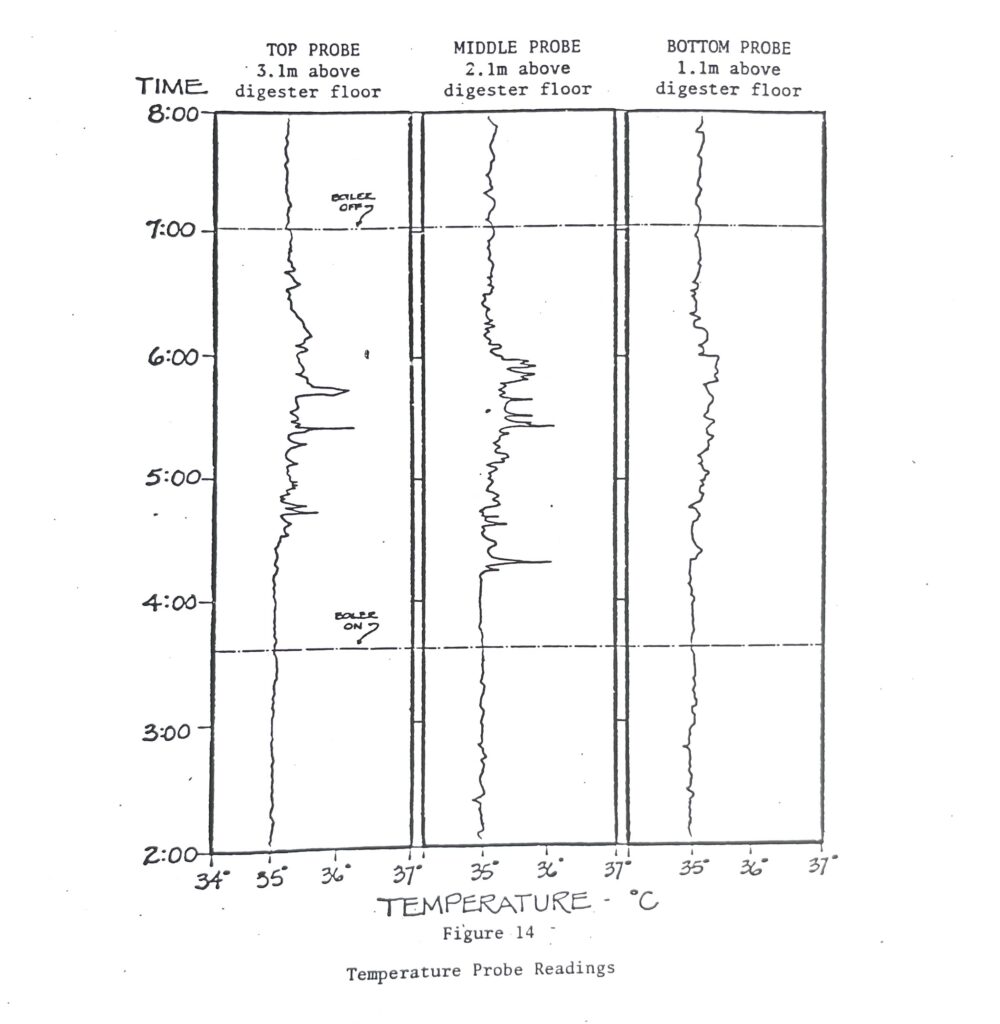
The natural mixing that occurs is due to gas movement and thermal convection currents from the heating system. Figure 14 shows movement from convection currents established when the boiler is running. At 2 a.m., the temperature throughout the digester was uniform. It had stabilized after the previous day’s loading, and the boiler had remained off for most of the night. When the boiler turned on, agitation could be seen at the three probe points. The spikes on the chart represent manure that heated above the temperature of the rest of the tank moving past the stationary probes. The decrease in the number of the spikes from the middle to the upper probe indicates that the manure is losing heat as it rises. The small temperature difference noted by the lower probe may indicate that the manure passing it is replacing the manure that has been warmed by the internal heat exchanger. This movement continued while the boiler was on and decreased after the boiler shut off. Because we have not yet been able to perfect a flow probe that can be inserted into our sampling ports, we are unable to detect any mixing that occurs isothermally.
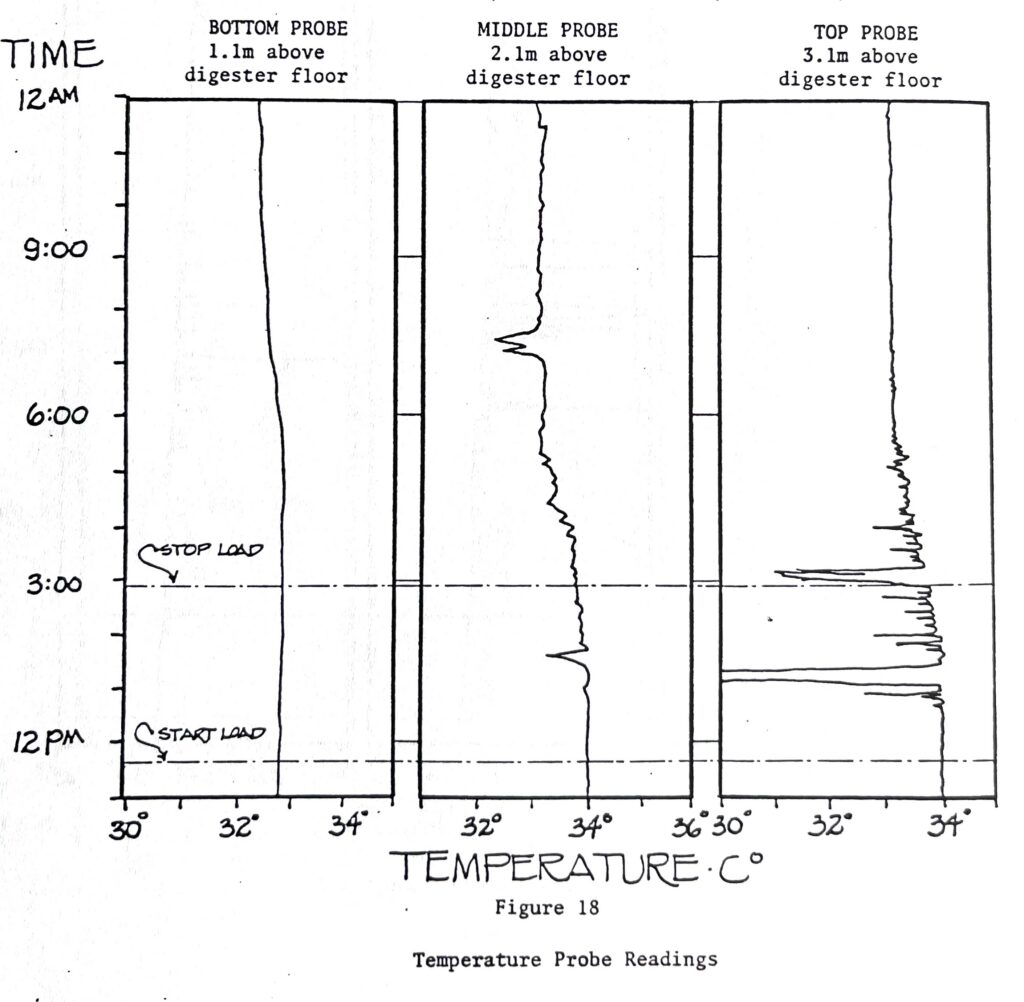
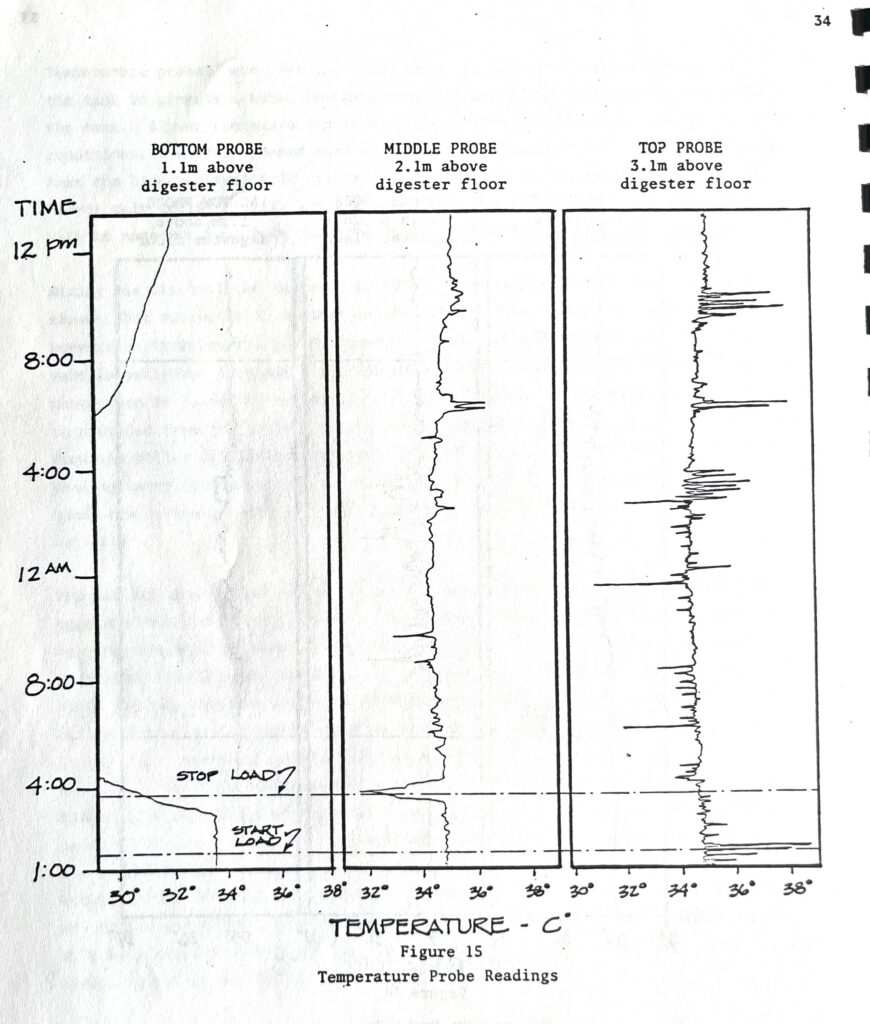
The impact of natural mixing with the boiler on during loading can be seen in Fig. 15. The temperature of the digester contents was relatively uniform before cold manure was loaded on the bottom. The drop in temperature at the bottom probe shows the buildup of cold manure. Sharp spikes of low temperature at the
35
upper probes indicate cold manure was passing by. These probes are located at 2.1 m and 3.1 m above the bottom of the tank. Mixing could be seen for about 10 hours after loading. Warm spikes predominate after the cold manure was heated and intermixed.
Figure 16 shows the impact of doubling the heat exchanger area. In this case, heat was provided from both the boiler and the I.C. engine. The effect of this heating configuration is an increase in the speed of mixing. Even though the size of the load is slightly larger than the previous example, the accumulation at the bottom probe is less and the raw manure is mixed in rapidly. Hot spikes predominate throughout, indicating that raw manure was warmed as it was mixed.
Mixing of freshly loaded manure, when the effects of convection currents and gas bubbling are minimized, can be seen in Fig. 17. Convective mixing was minimized by not heating with the boiler or I.C. engine, and by loading the cold manure influent into the bottom of the digester tank. The mixing effect of gas bubbling was most likely minimized, since it is expected that most of the gas bubbling occurred above the accumulation of manure on the tank bottom. The cold manure was distributed slowly throughout the tank, drawing the overall temperature down as it mixed.
In contrast to Figure 17, the effect of loading the digester to the top is shown in Figure 18. In this case, mixing that resulted from convention currents and gas bubbling was optimized. The cold manure was mixed by convection as it tended to settle toward the tank bottom, and was also mixed by gas bubbling during its downward motion. Once again, the boiler remained off, however, the cold manure almost completely mixed into the warm manure in only about six hours.
The indications from the studies and gas production data are that in-tank mixing equipment can be eliminated from dairy manure digester designs. Natural mixing from convection currents and gas bubbling can sufficiently mix the digester contents. More rapid and thorough mixing can be achieved if manure is loaded to the top of the digester, because the effects of convective mixing and gas bubbling are optimized. Problems of scum formation can be eliminated simply by keeping the % TS of the digester contents above the point at which scum layer formation ceases to be a problem.
The elimination of in-tank mixing systems has a great impact on the economic feasibility of digestion. It reduces capital, energy, and maintenance costs. It also reduces the vulnerability inherent in having equipment inside the digester